
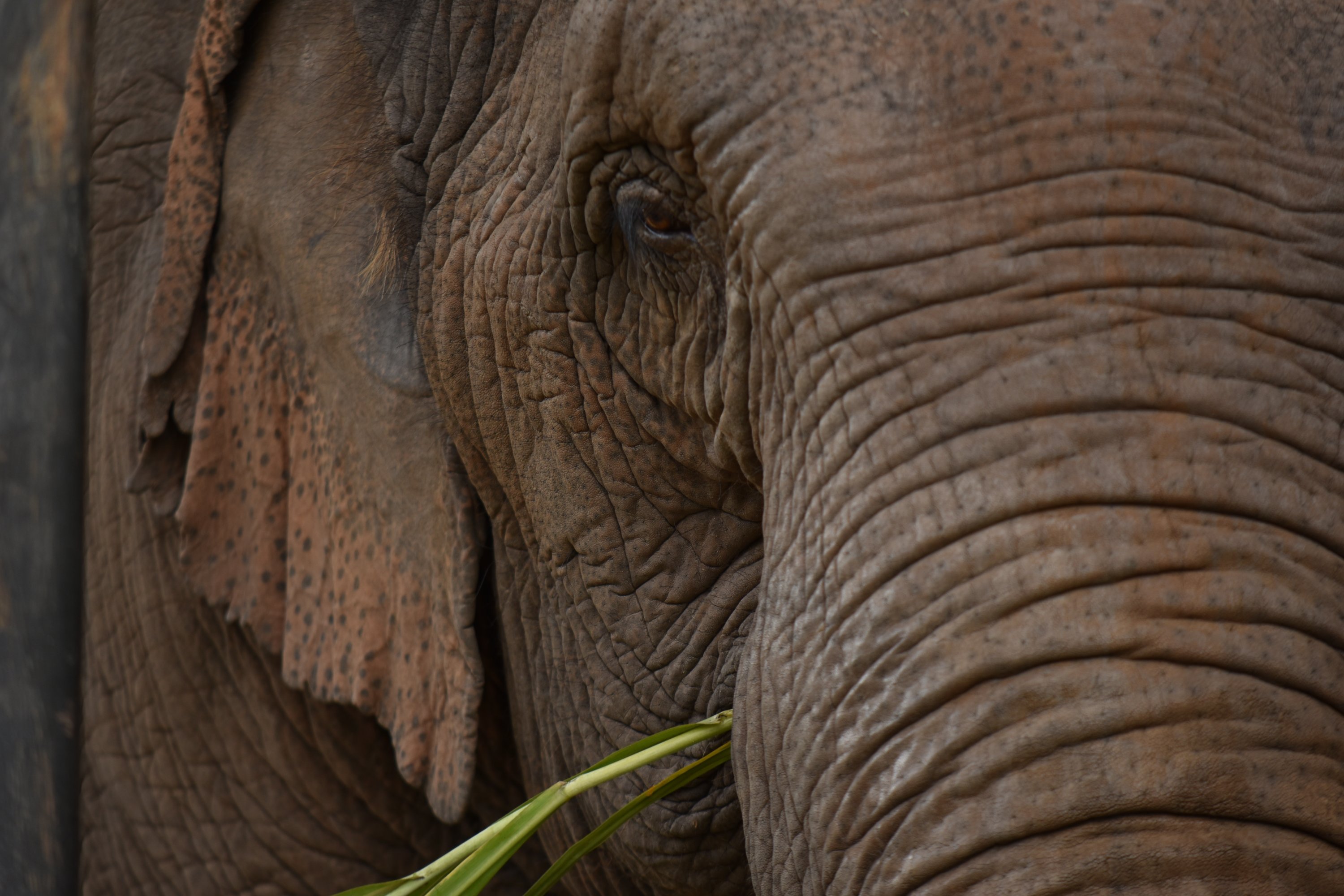
This is a long one folks, so pop your popcorn, brew a cup of tea, and settle in for a nice read. So while we were in Chiang Mai, we noticed a lot of advertisements for elephant sanctuaries which peaked our interest. After doing some research we stumbled across a glowing review for Burm & Emily’s Elephant Sanctuary (BEES) and decided to reach out to them about the possibly of volunteering. Within 30 minutes we had already received an enthusiastic response from Emily, the co-founder. Seeing as it’s low-season for tourism in Thailand right now Emily surprised us with a discounted offer and just like that we were their newest recruits!
BEES was the elephant sanctuary of our choosing because of their hands-off approach to elephant tourism. There is no riding or bathing of elephants at BEES, just observing elephants being elephants. Although not a strange concept, it is still a fresh idea for elephant tourism in Thailand, where other companies advertise riding, hand-feeding, bathing and grooming as the main activities.
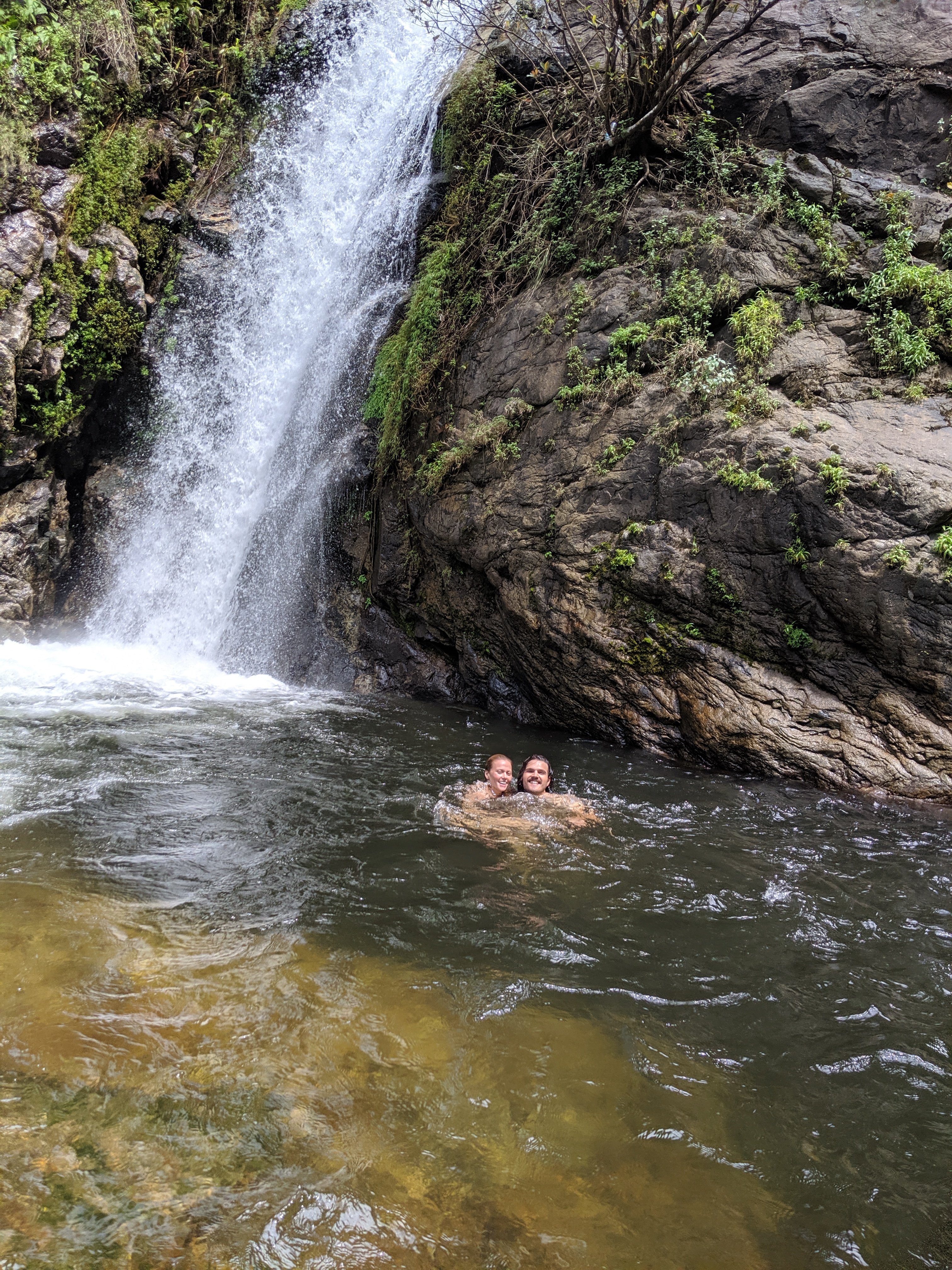
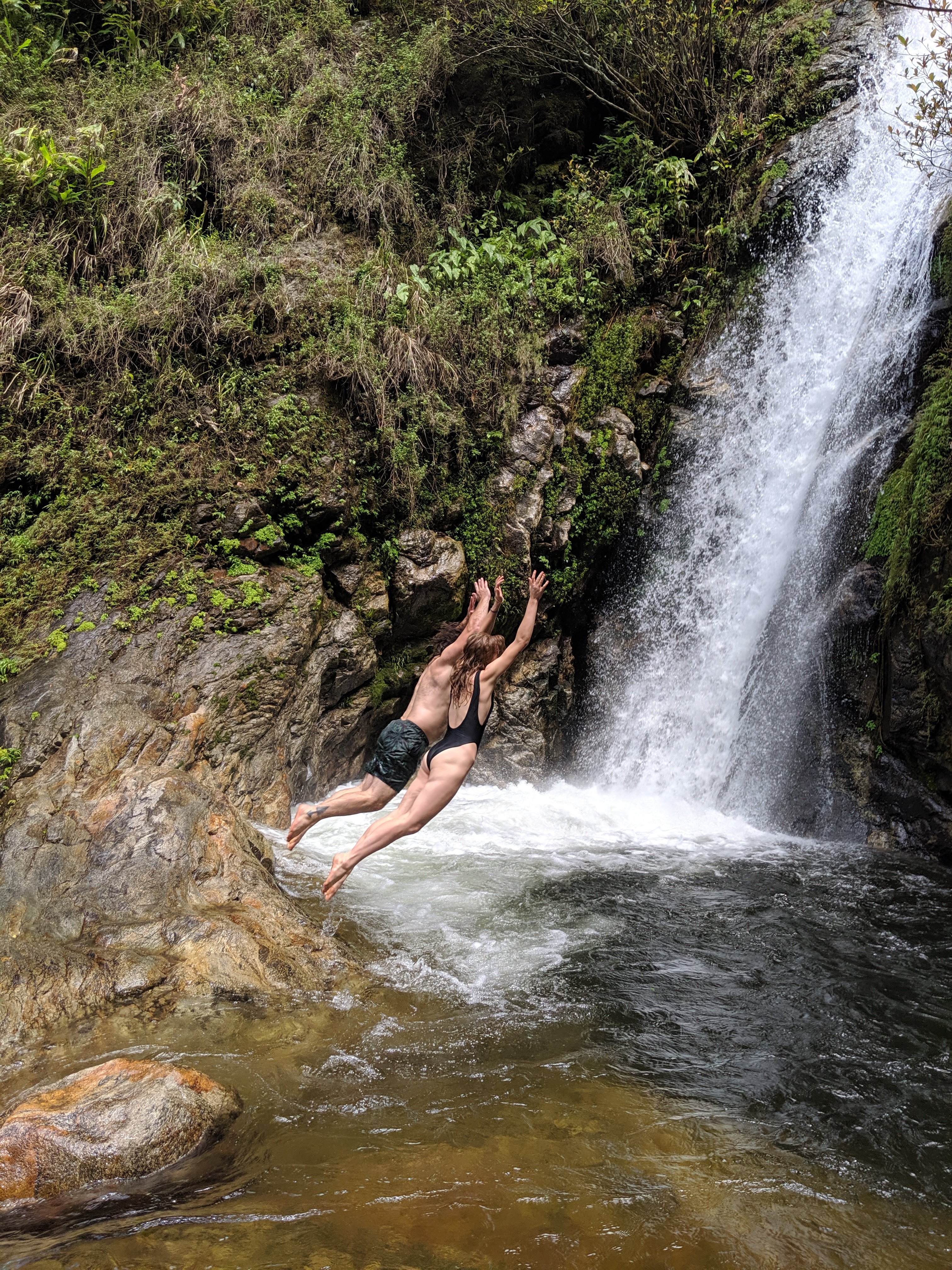
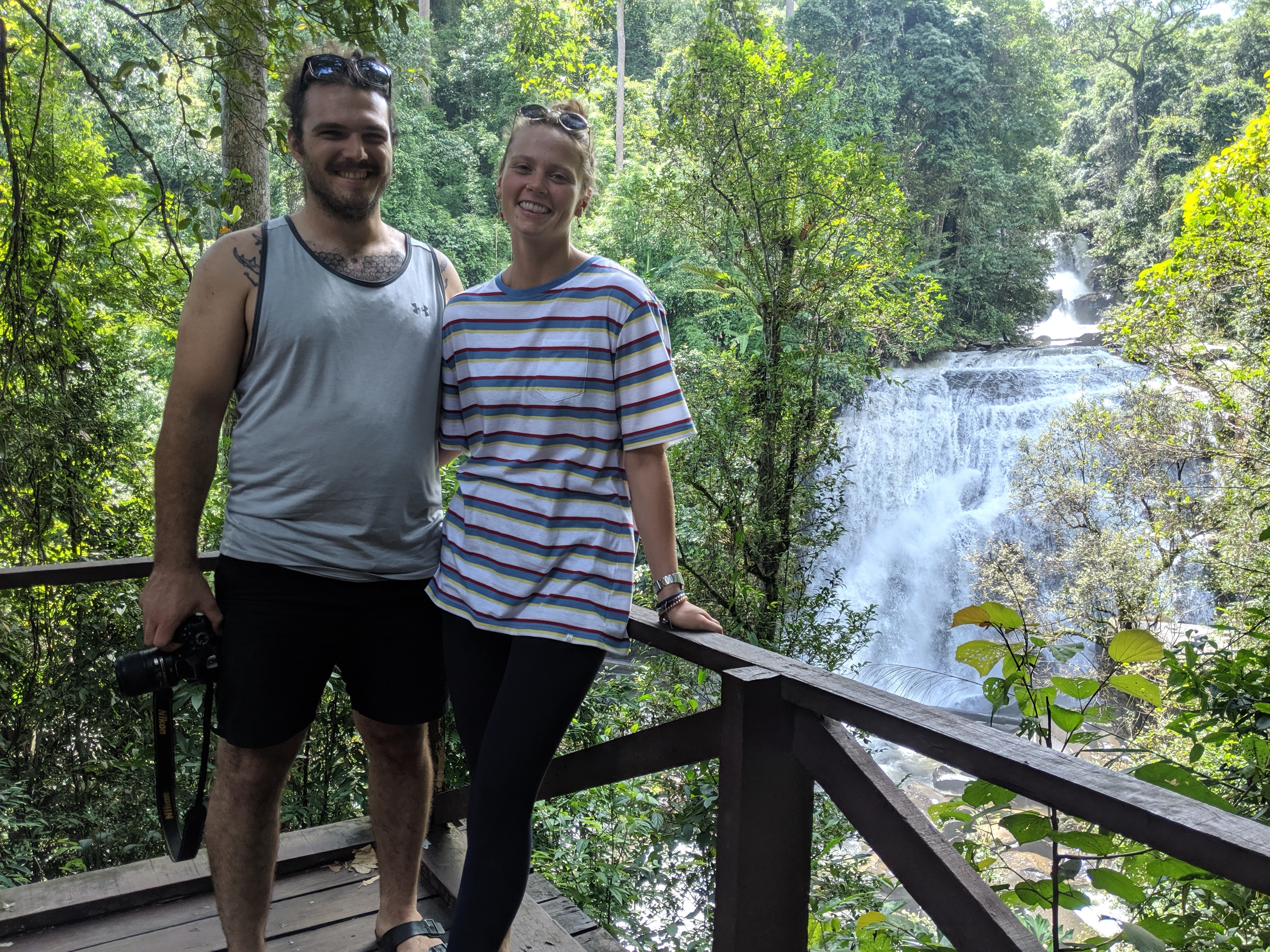
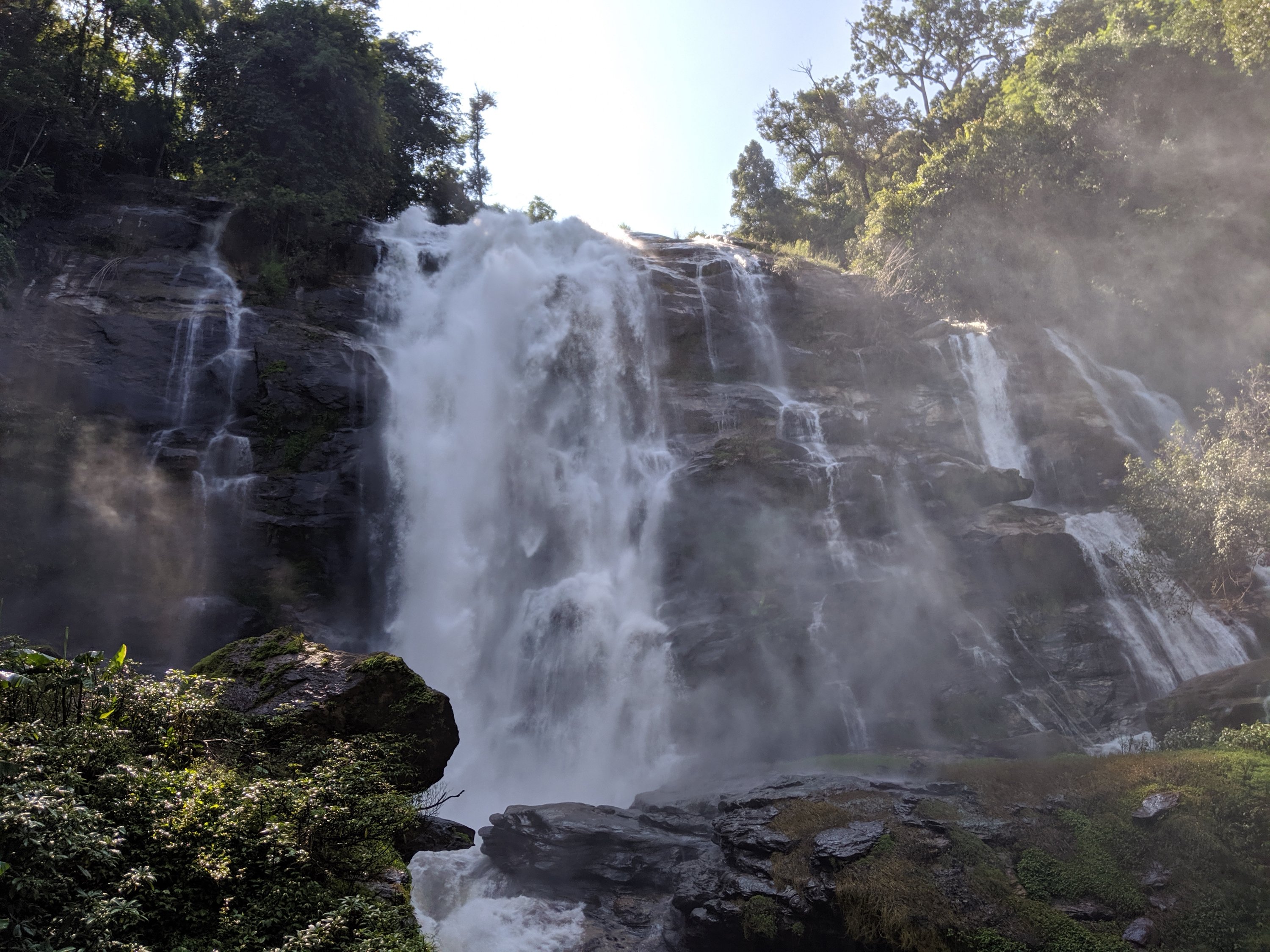
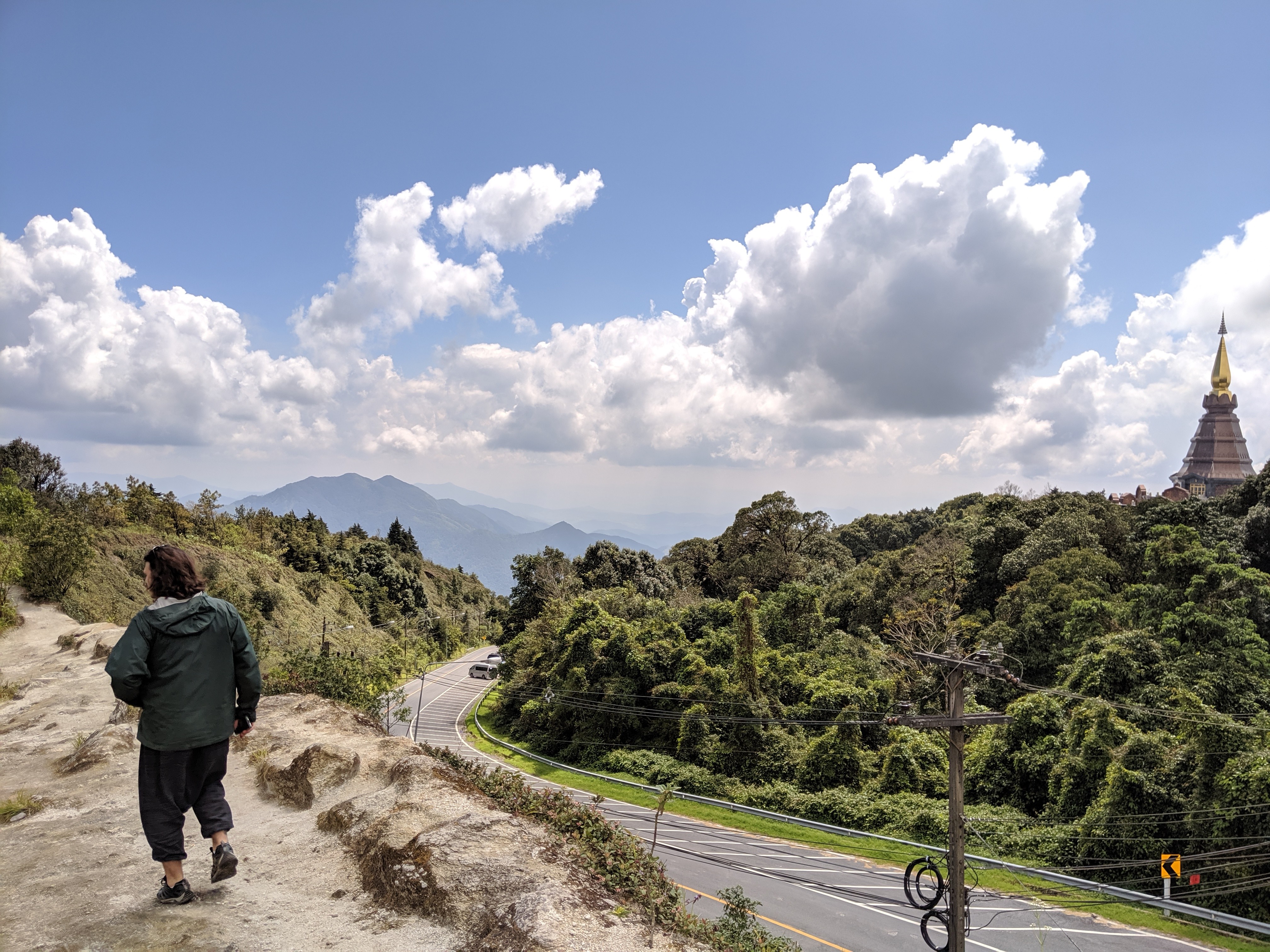
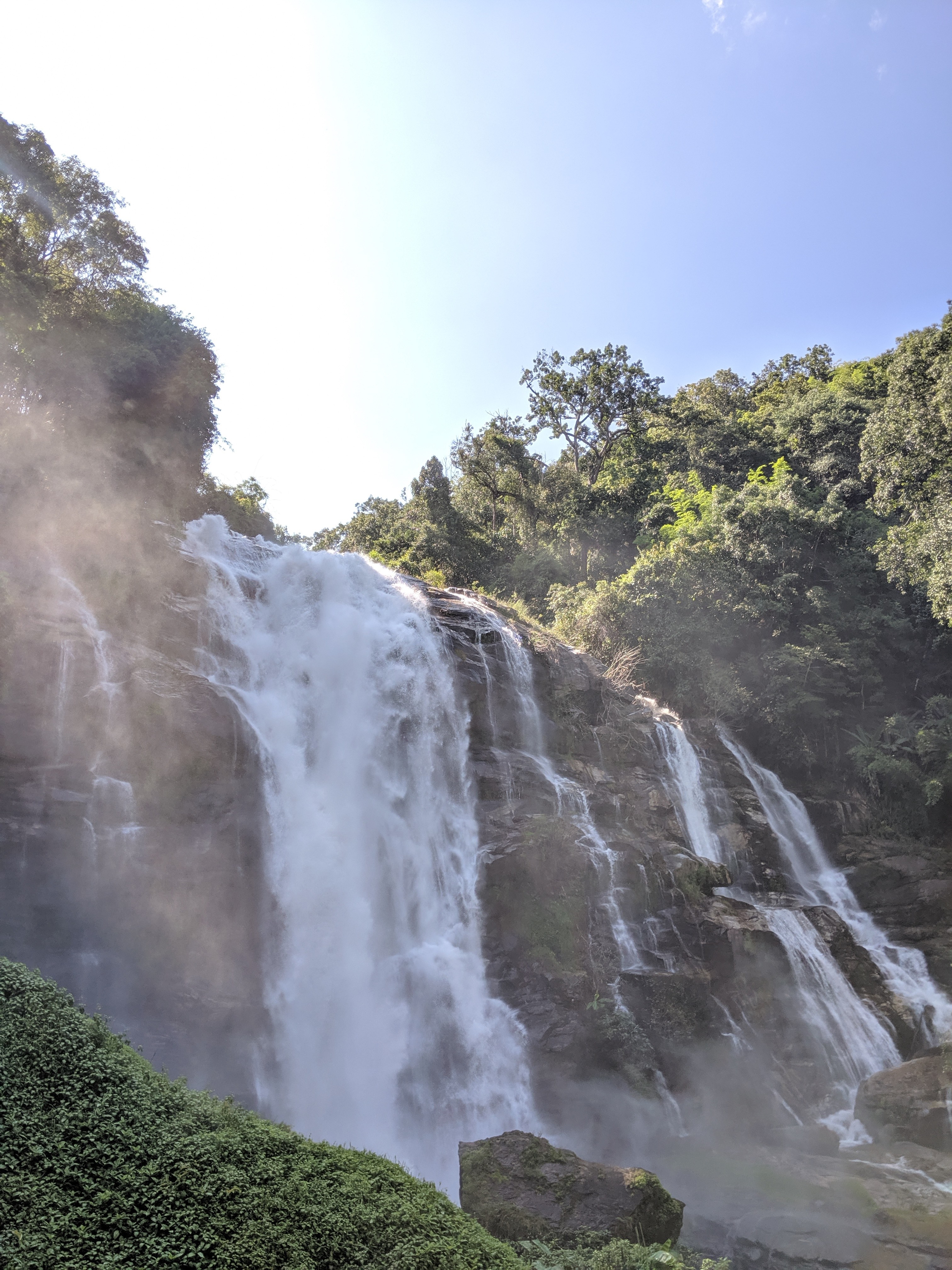
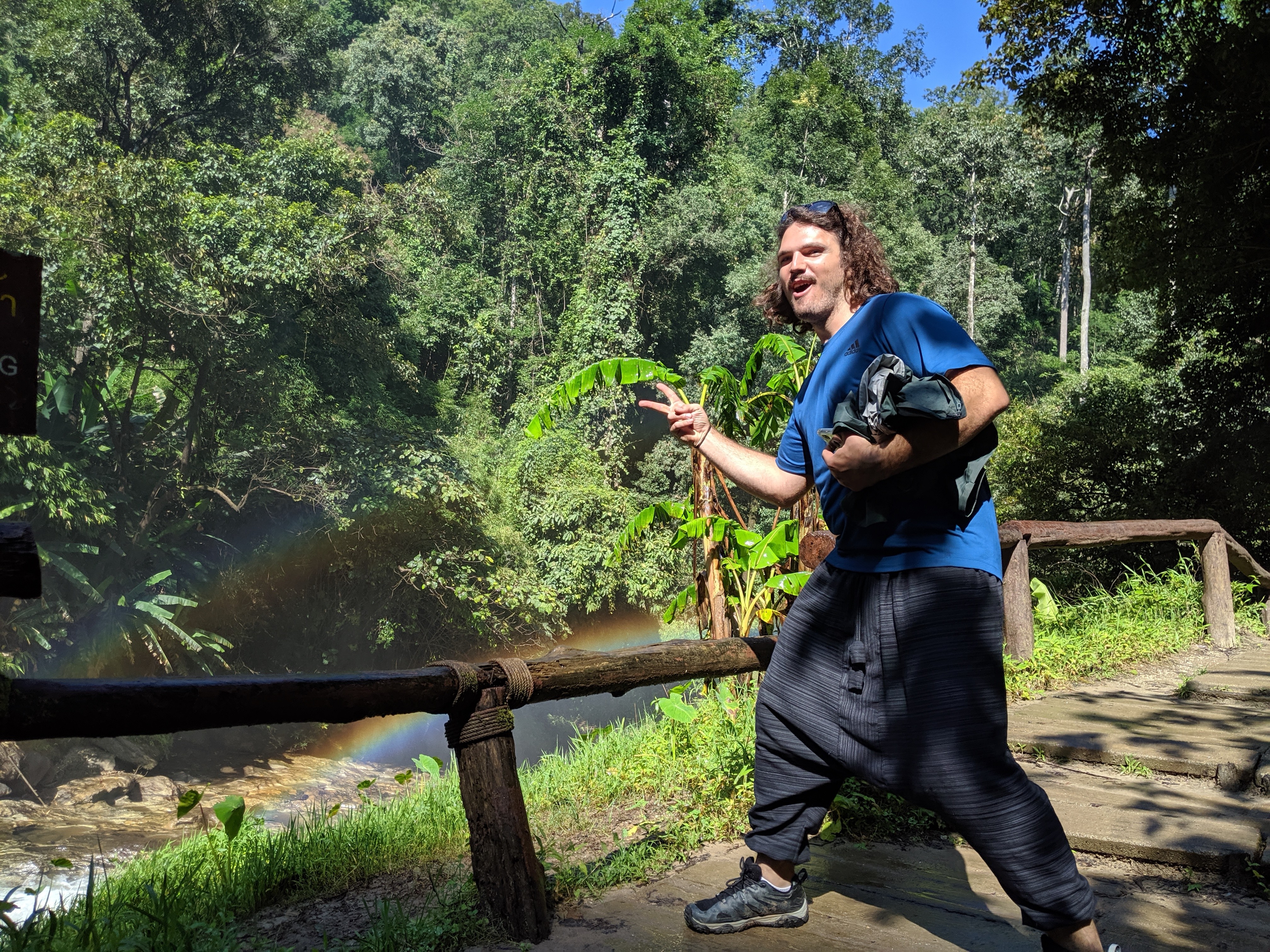
Our adventure began when BEES arranged to pick us up directly from our hostel in Old Town Chiang Mai. Their sanctuary is located in the Mae Cham district, found in the heart of Doi Inthanon National Park. It was about a 4 hour drive away! Our driver’s name was Tan and he was great to chat with as he answered a lot of questions we had about the area. We spent most of our drive singling along to his homemade mixtape of early 2000s BANGERS including Kelly Clarkson and James Blunt; he uses American music to help improve his English. He also told us Thai’s like really spicy food as they believe it builds strength. Tan’s hospitality and friendly demeanour made for a great start to our excursion. Early on, we noticed a giant billboard with a rhinoceros beetle, and Tan (to our surprise) said that Thailand engages in ‘beetle fighting’ and it is actually a hobbby of his! More on this later 👀. Soon after, we were aware that we were headed for Doi Inthanon National Park, the park we had gone to the day before however, although this time we didn’t have to pay the admission fee 😅 Once we got through the gates Tan took us to a beautiful waterfall for a picnic and a swim. It was so refreshing!
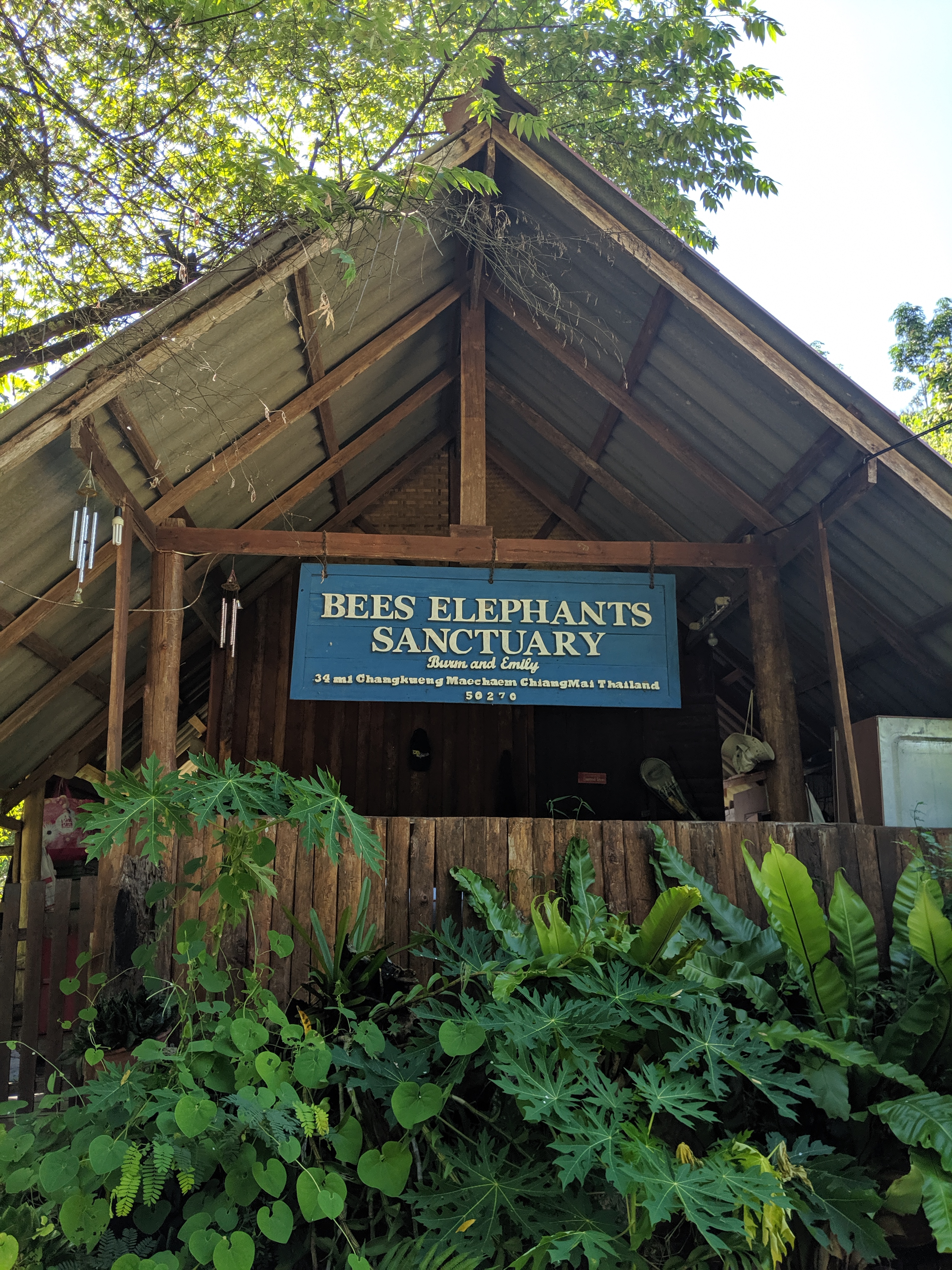
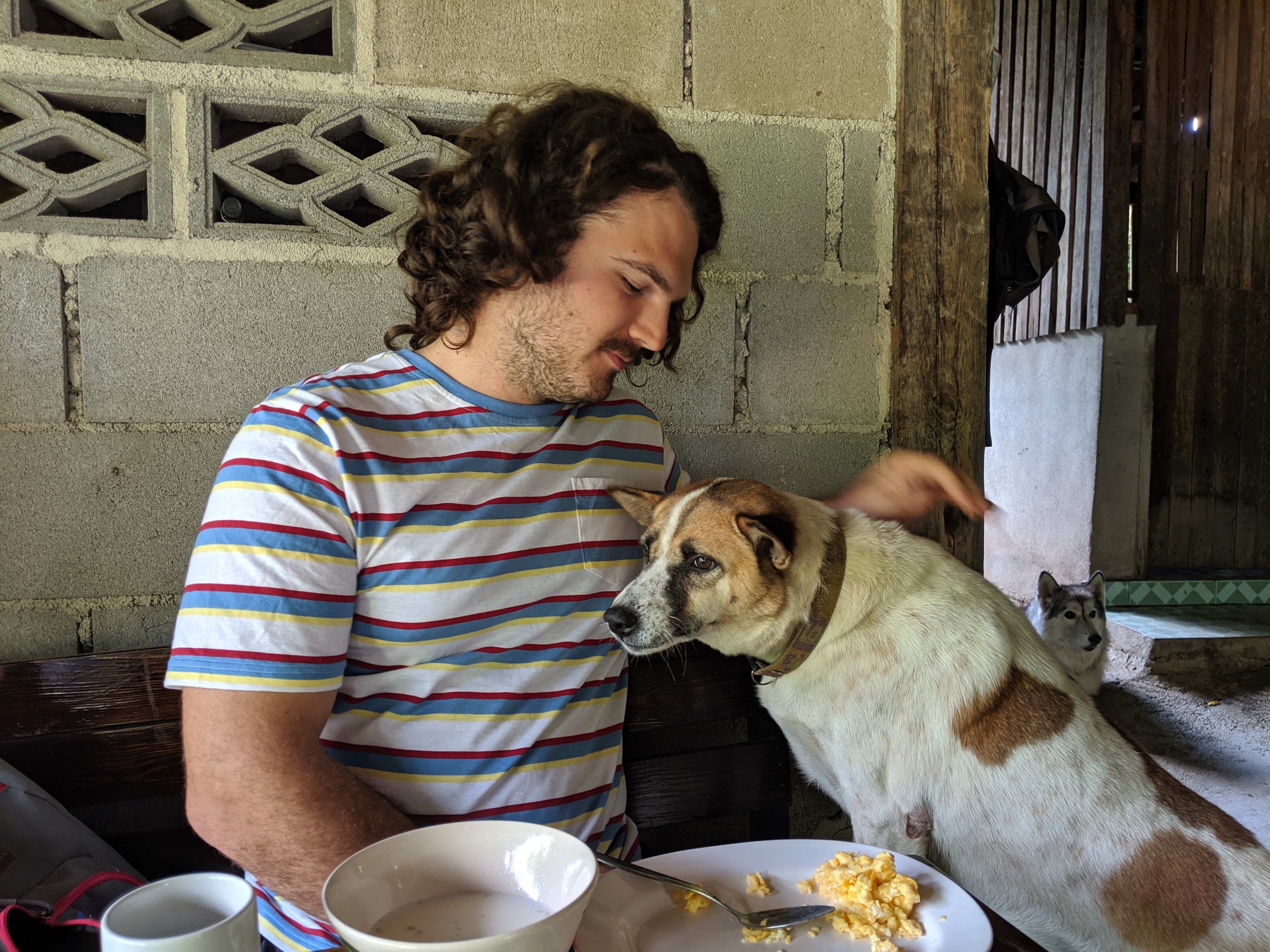
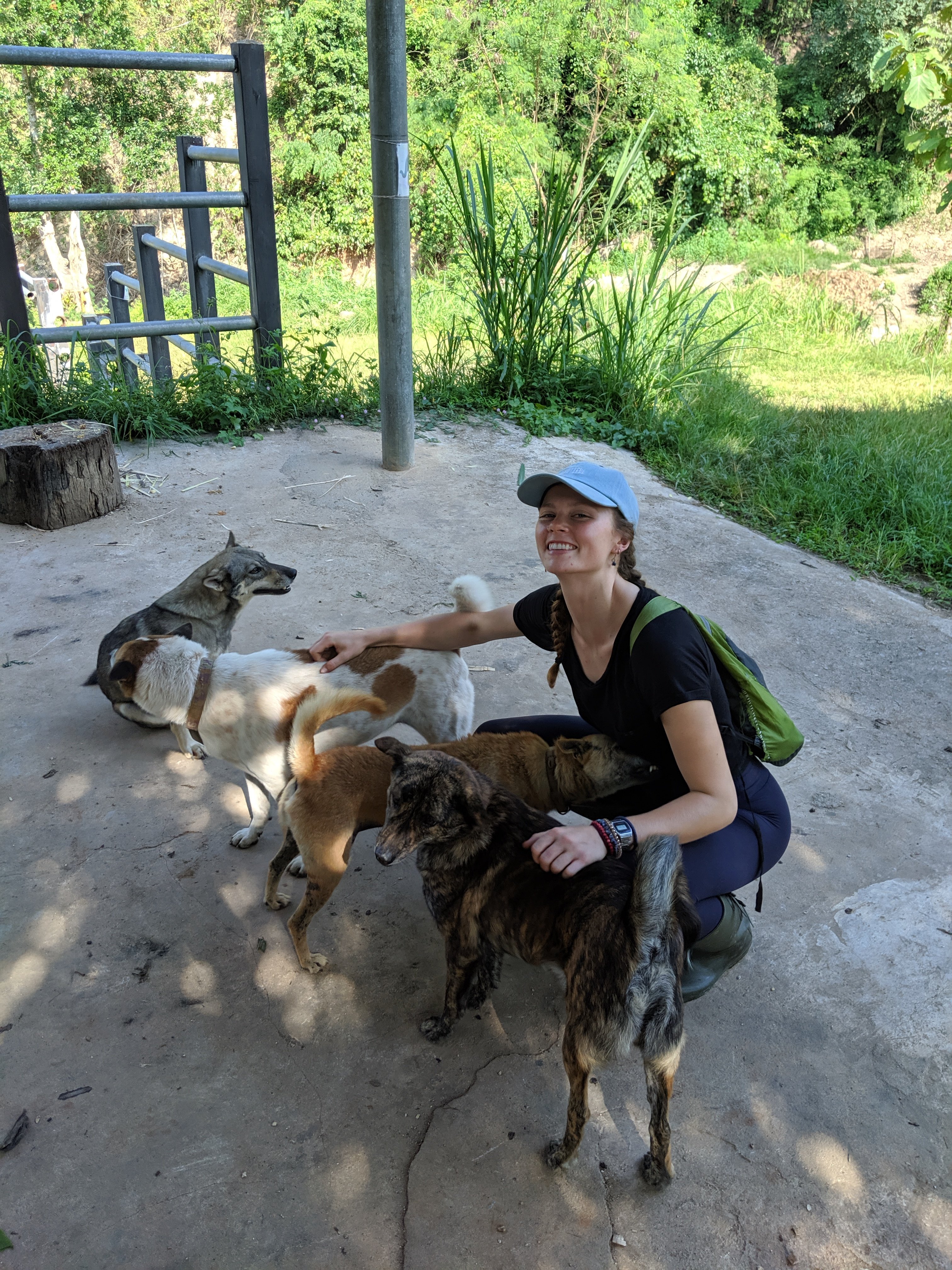
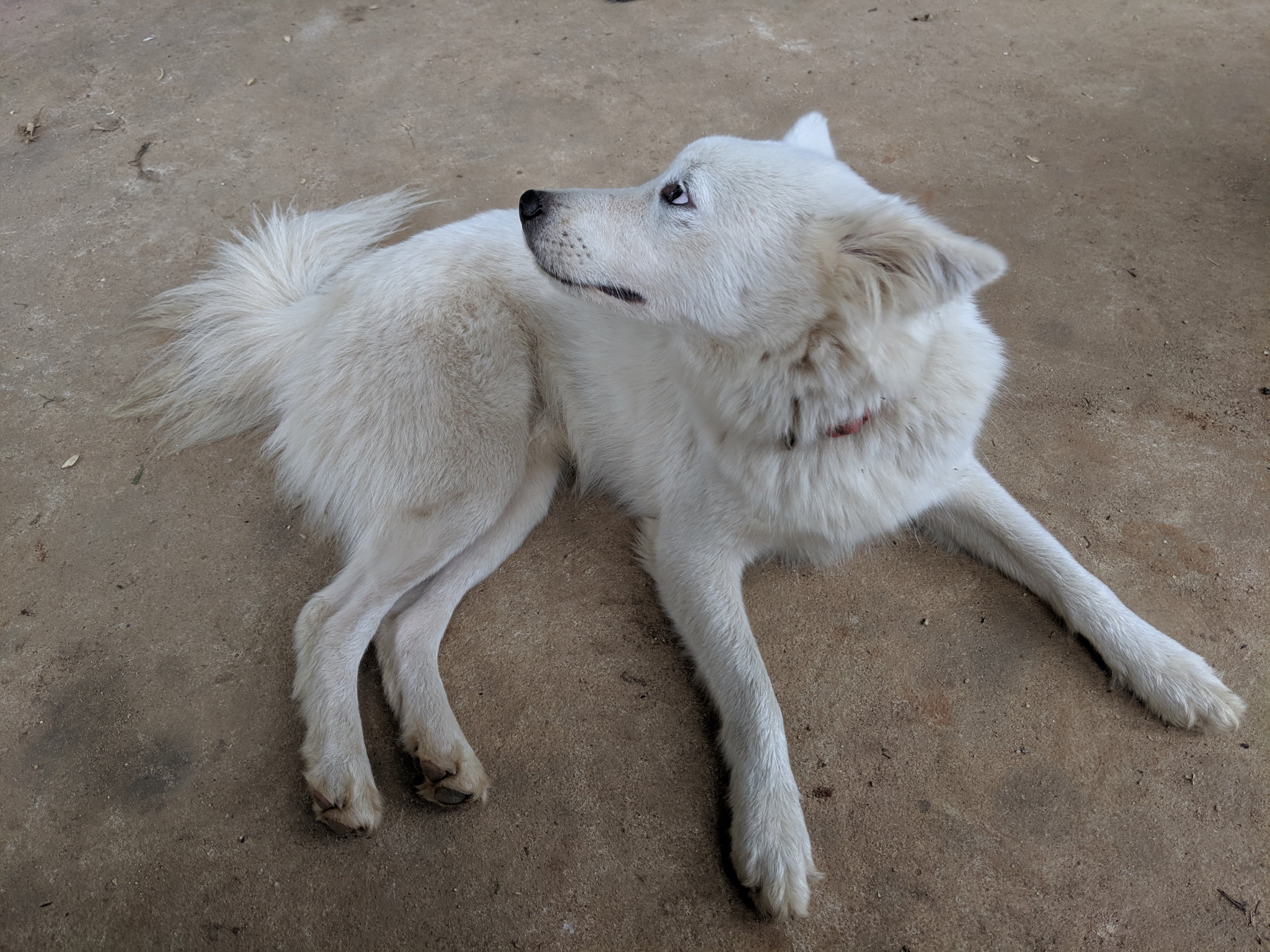
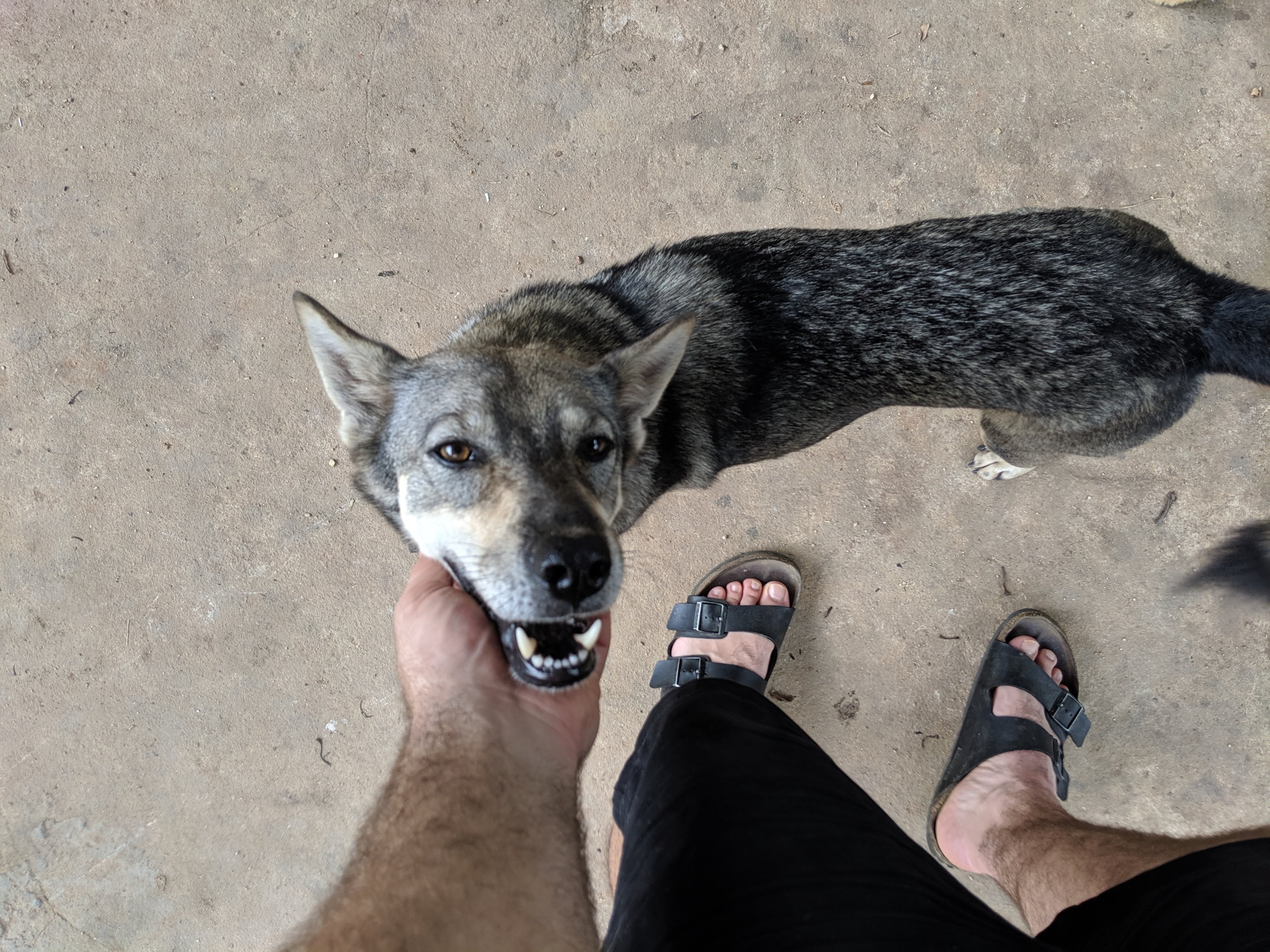
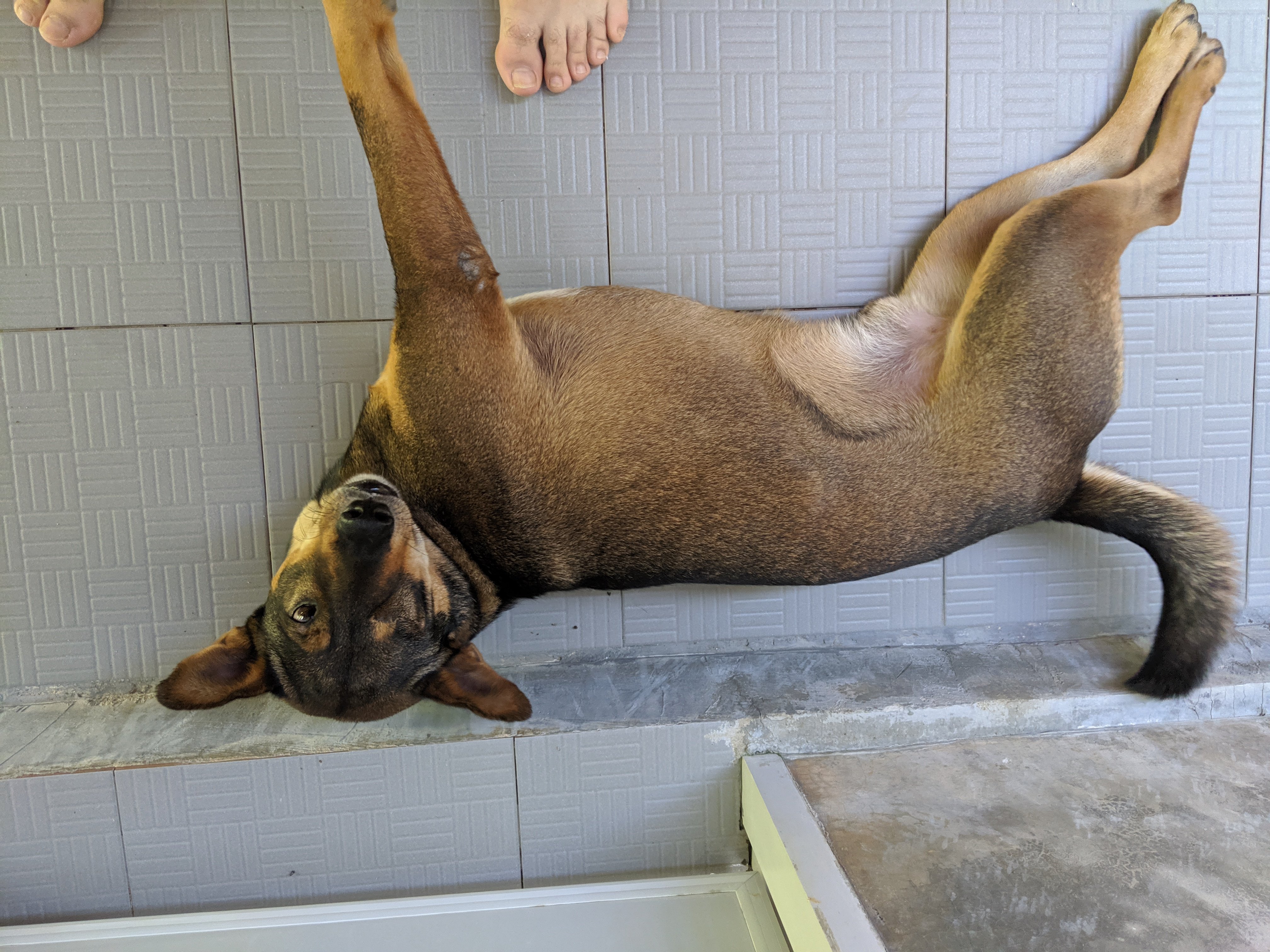
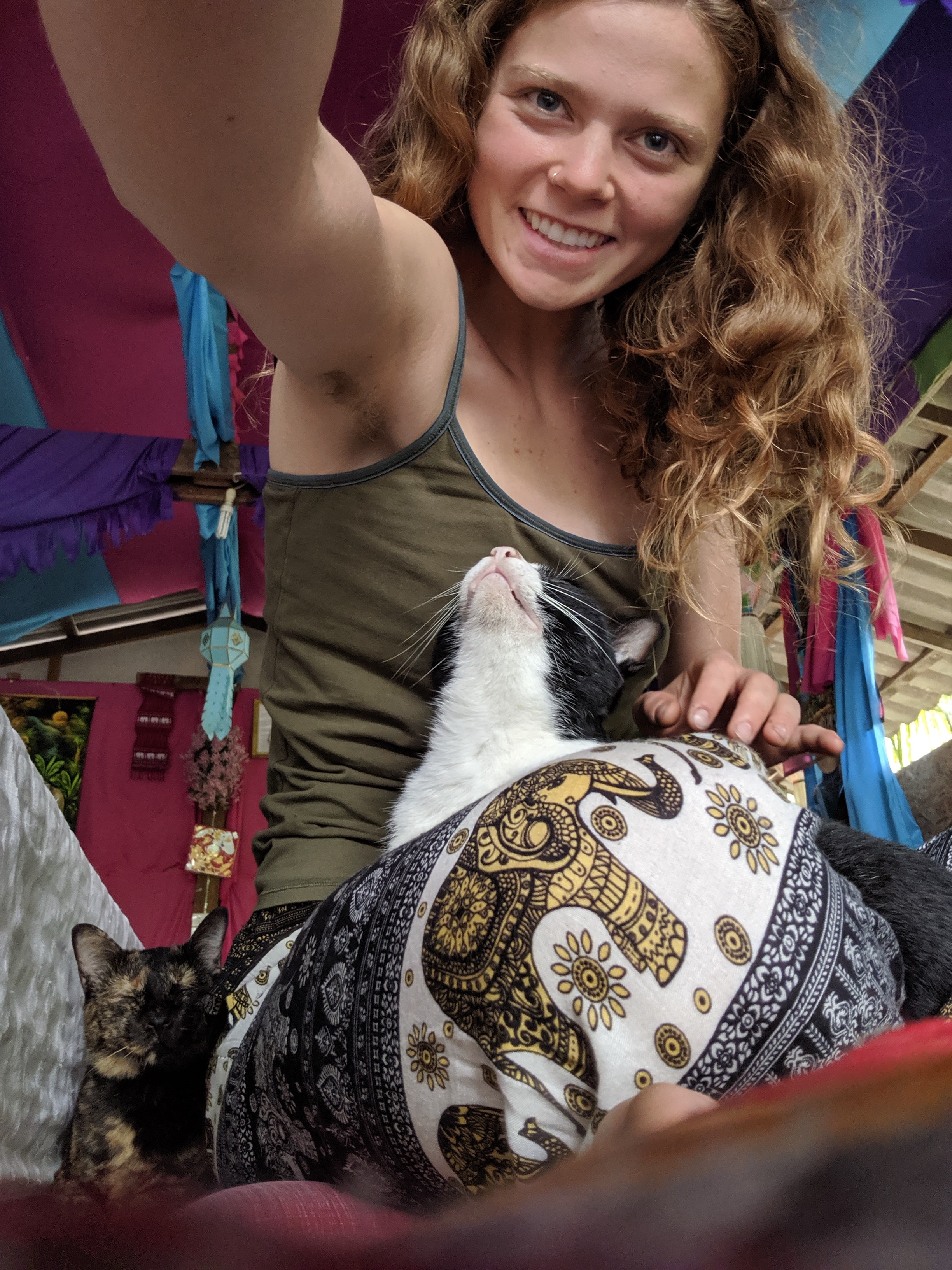
Upon arrival to BEES we were greeted by a what felt like hundreds of cats and dogs!! Okay, okay, it was more like 20, but still, it was a little overwhelming (but in a good way, it was actually HEAVEN).
We had about 40 mins to settle into our jungle bungalow before we were put to work. Our first task was to help prepare treats for the elephants! These treats are used as incentive for the elephants to return to their paddocks at the end of every day, as they are given all day to graze as they please throughout the jungle. First, we peeled and mushed (with our hands) about 80 bananas and ran long sticks of sugarcane through a shredder. While Kylie was shredding sugarcane, Matt was expertly wielding a machete to finely peel and chop pumpkin. This snack was for Thong Dee, the oldest elephant at bees, a whopping 74 years young. She is on her last set of teeth (elephants have 6 sets of teeth in their lives), and elephants can develop serious gastrointestinal blockages if they can not chew and/or digest their food properly. So Thong Dee was fed this delicious slurry, which she slurped up with her trunk and blasted into the back of her mouth!
For the other 2 elephants, we made an assortment of unpeeled bananas and large pumpkin slices into baskets. And then, we got to deliver the elephant snacks! We got to feed the 2 younger (middle-aged) elephants the first day, Mae Kam and Mae Dok. We quickly shoved their respective bins into their paddocks and backed away a few feet to watch them eat. This also gave us a chance to get to know Emily. She moved to Thailand from Australia when she was 18, married Burm when she was 21, gave birth to their son at 23 and now, at the age of 26, her and Burm now have 3 elephants in their care at BEES.
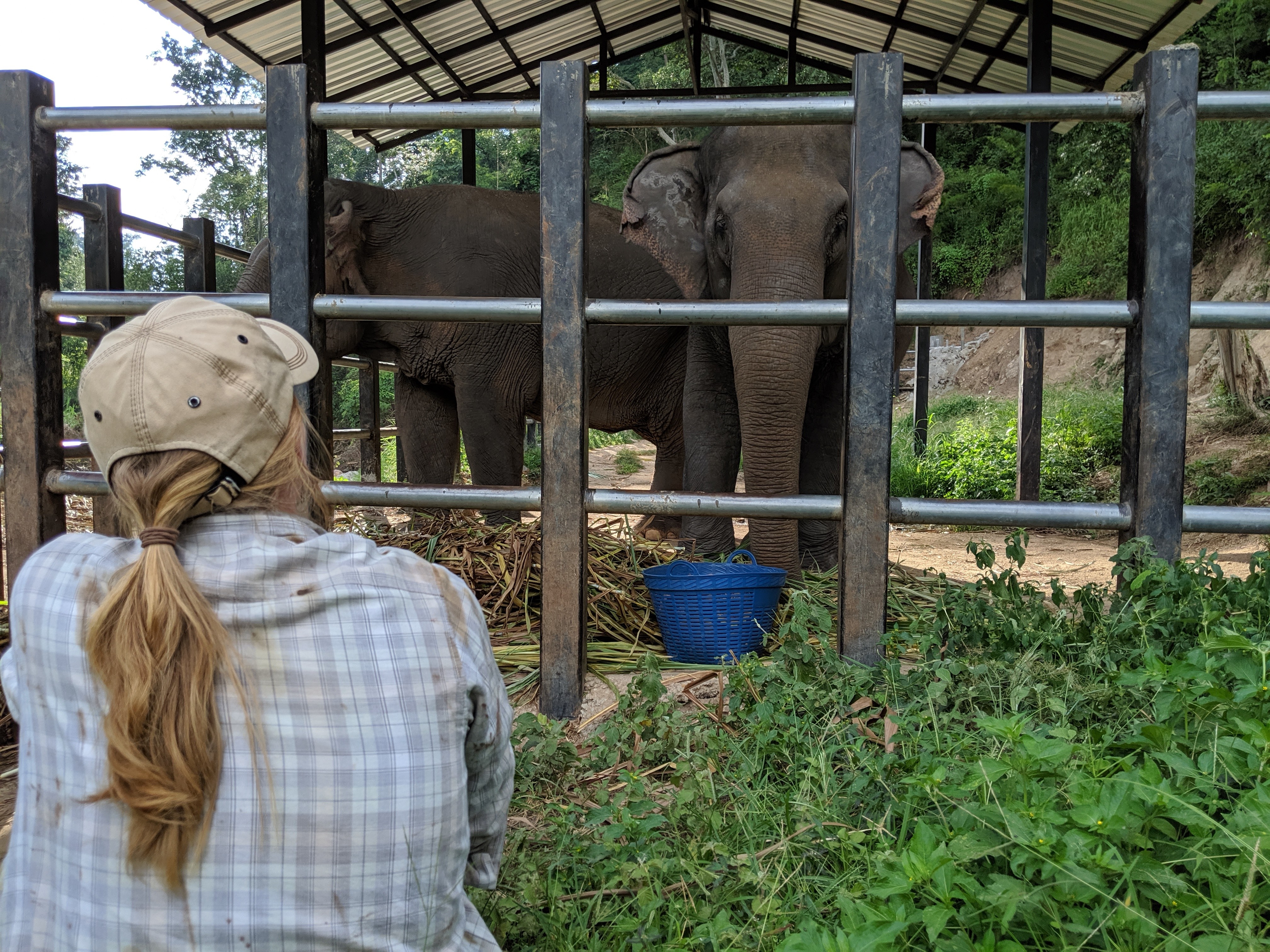
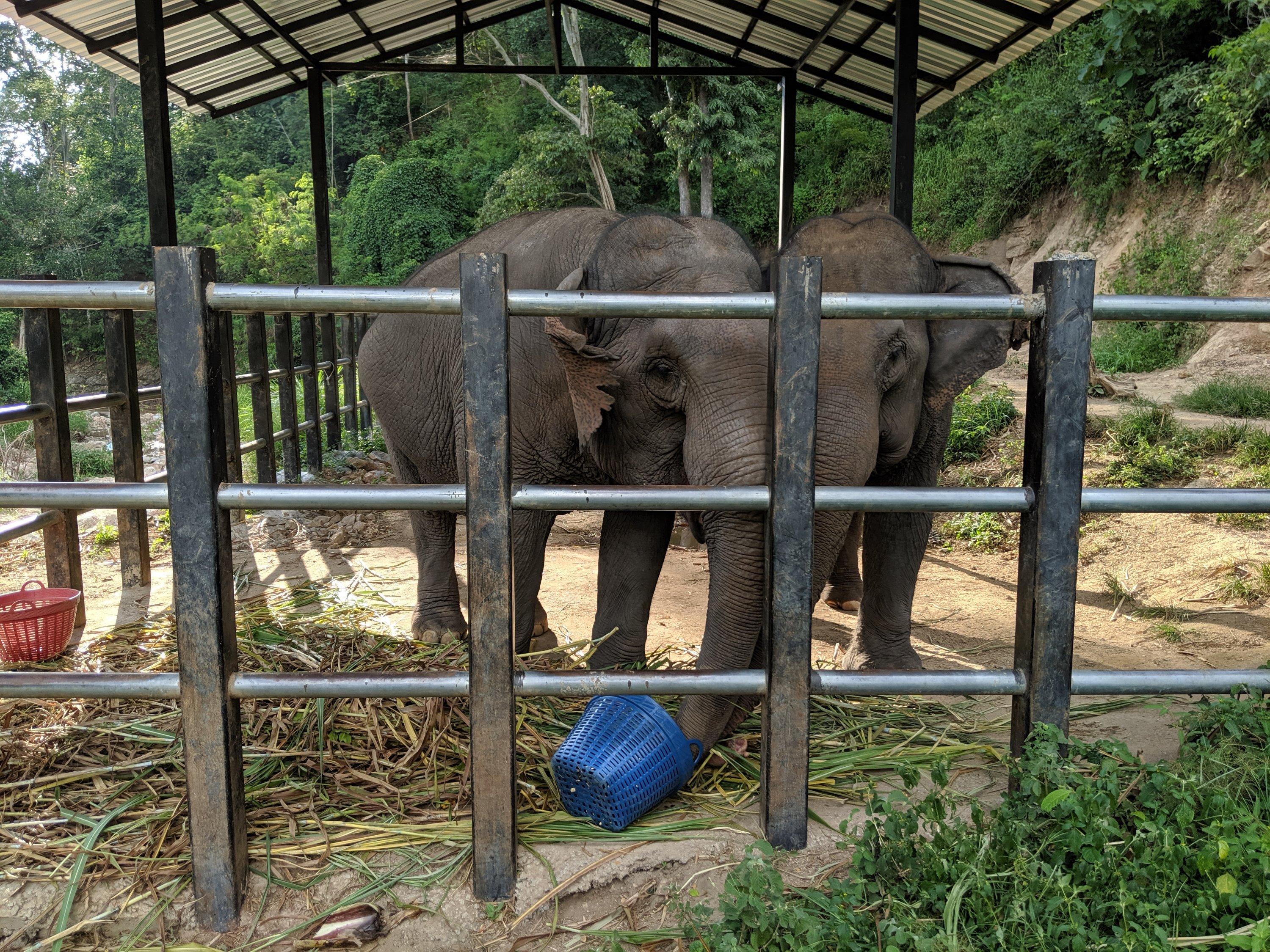
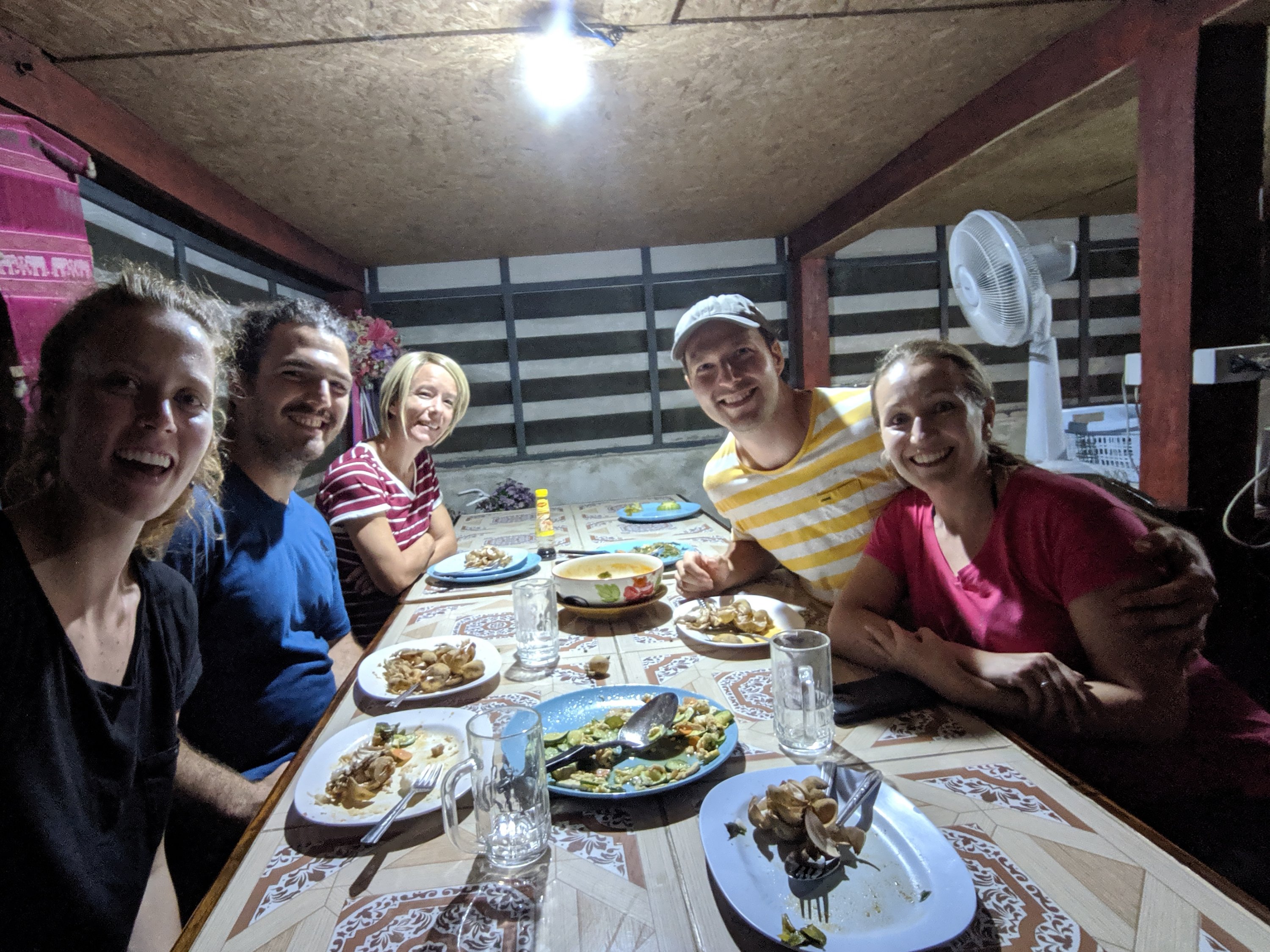
Then we ate dinner, and there was a German-Russian couple there who did a day trip at BEES and they joined us for the meal. Also joining us was the animal behaviourist Chrissy from Montana. We had a great dinner with discussions surrounding politics in each country, environmentalism, and insects as food (obviously).
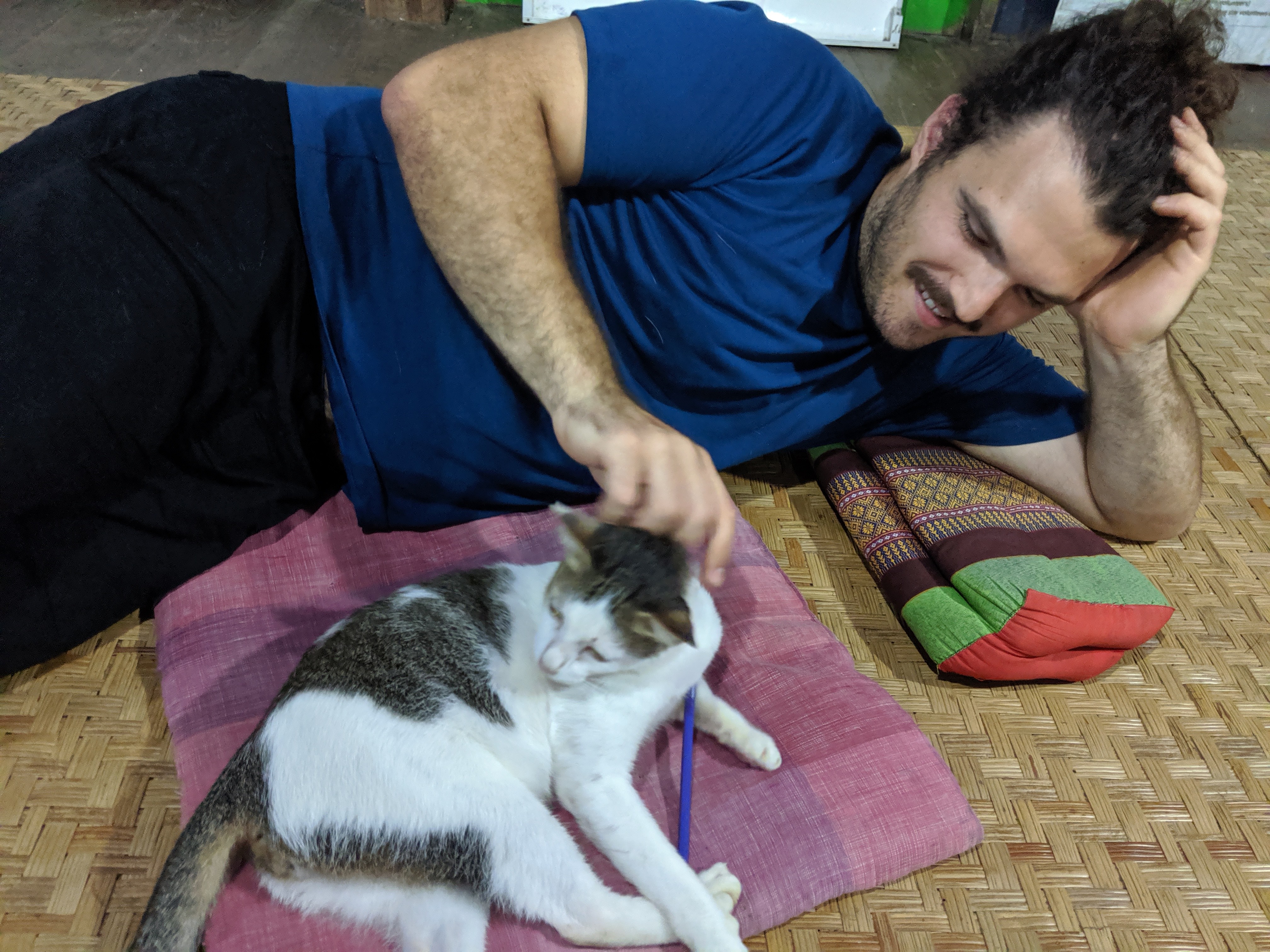
After dinner, we headed upstairs to the Kitty Cafe and played cards with Tee and Got, 2 of the employees at BEES, who were actually each of our respective ages. We taught them how to play crazy 8’s, and they taught us a Thai card game. Afterwards, we headed off to our first sleep without AC!! But it was actually ok, and we slept like babies.
FIRST FULL DAY
We woke up to fresh breakfast awaiting us. We ate and drank coffee outside with the dogs until our new friend Got (aka our jungle guide) arrived.
Chrissy the behaviourist also joined us. Got lead us along a river, following the elephants tracks into the jungle.We were essentially tracking them so we could see them just being elephants in the jungle.
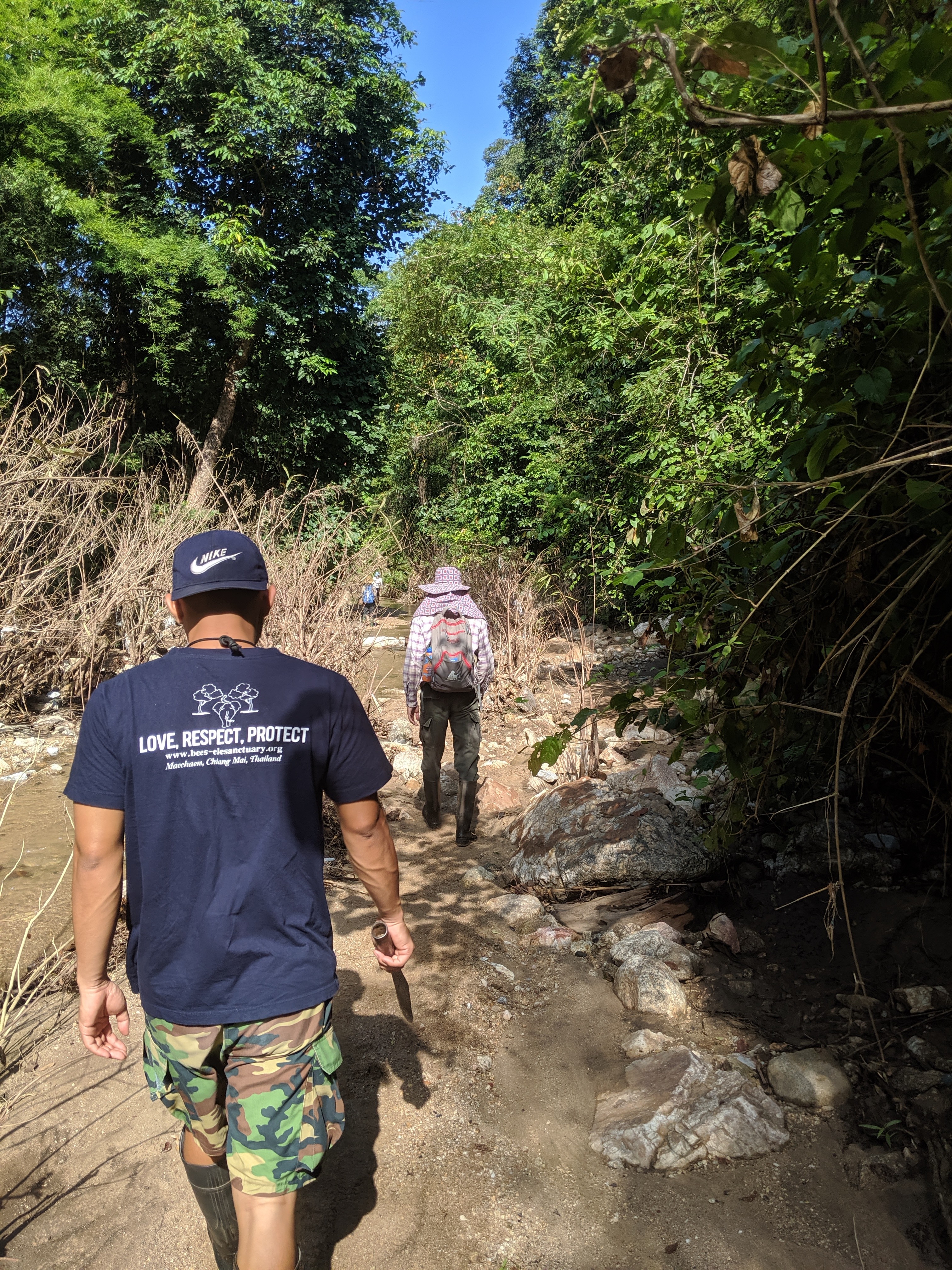
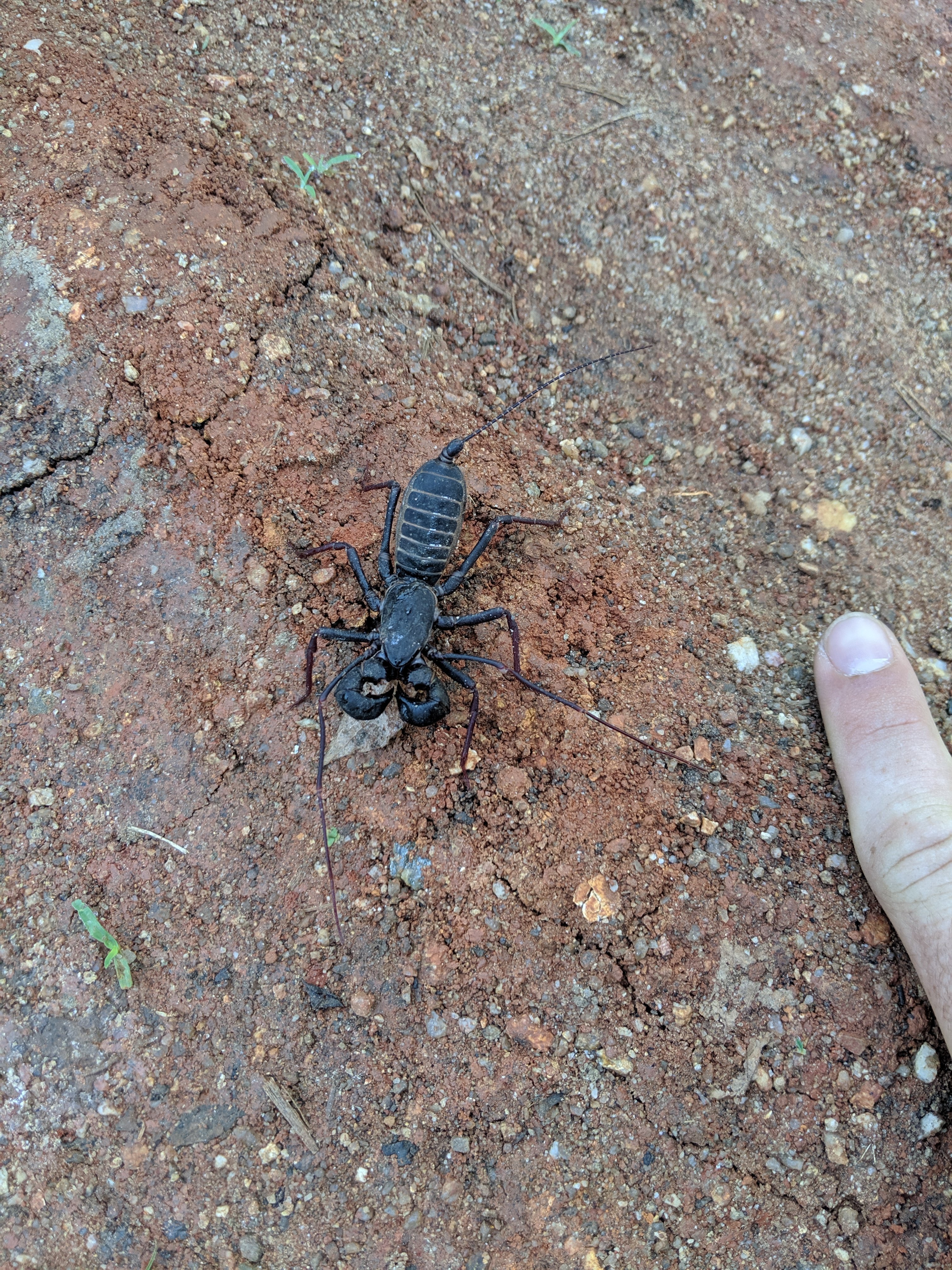
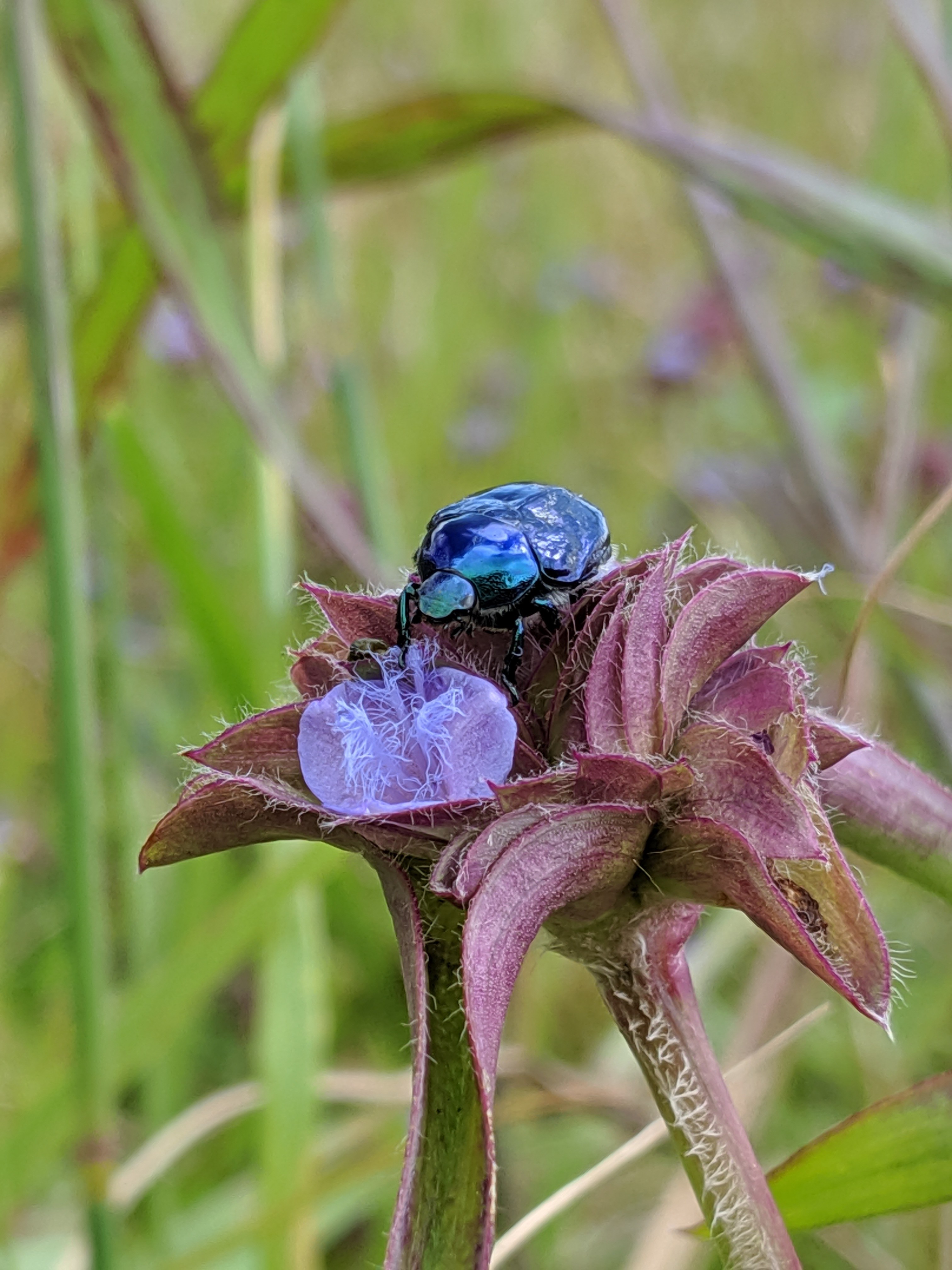
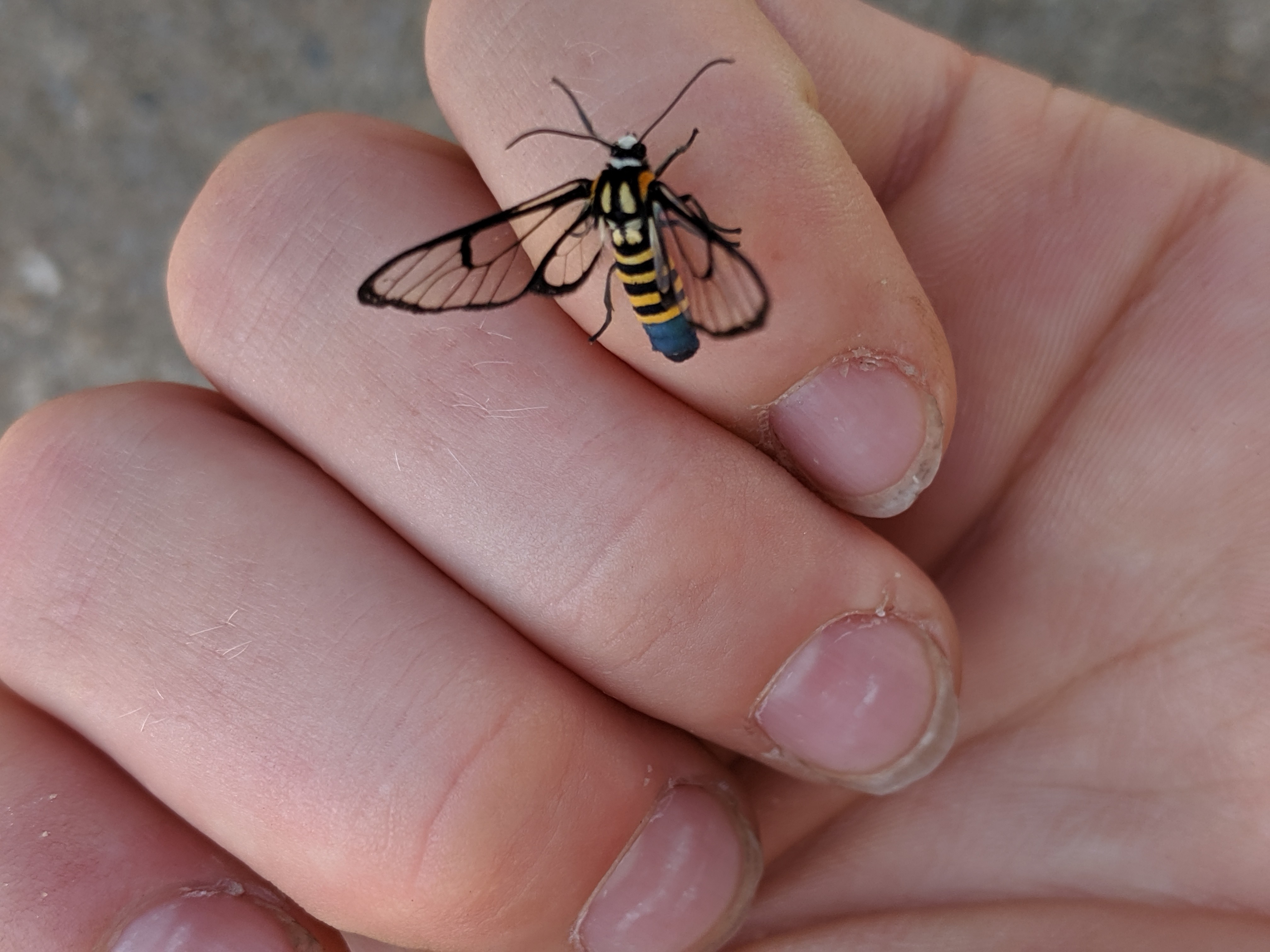
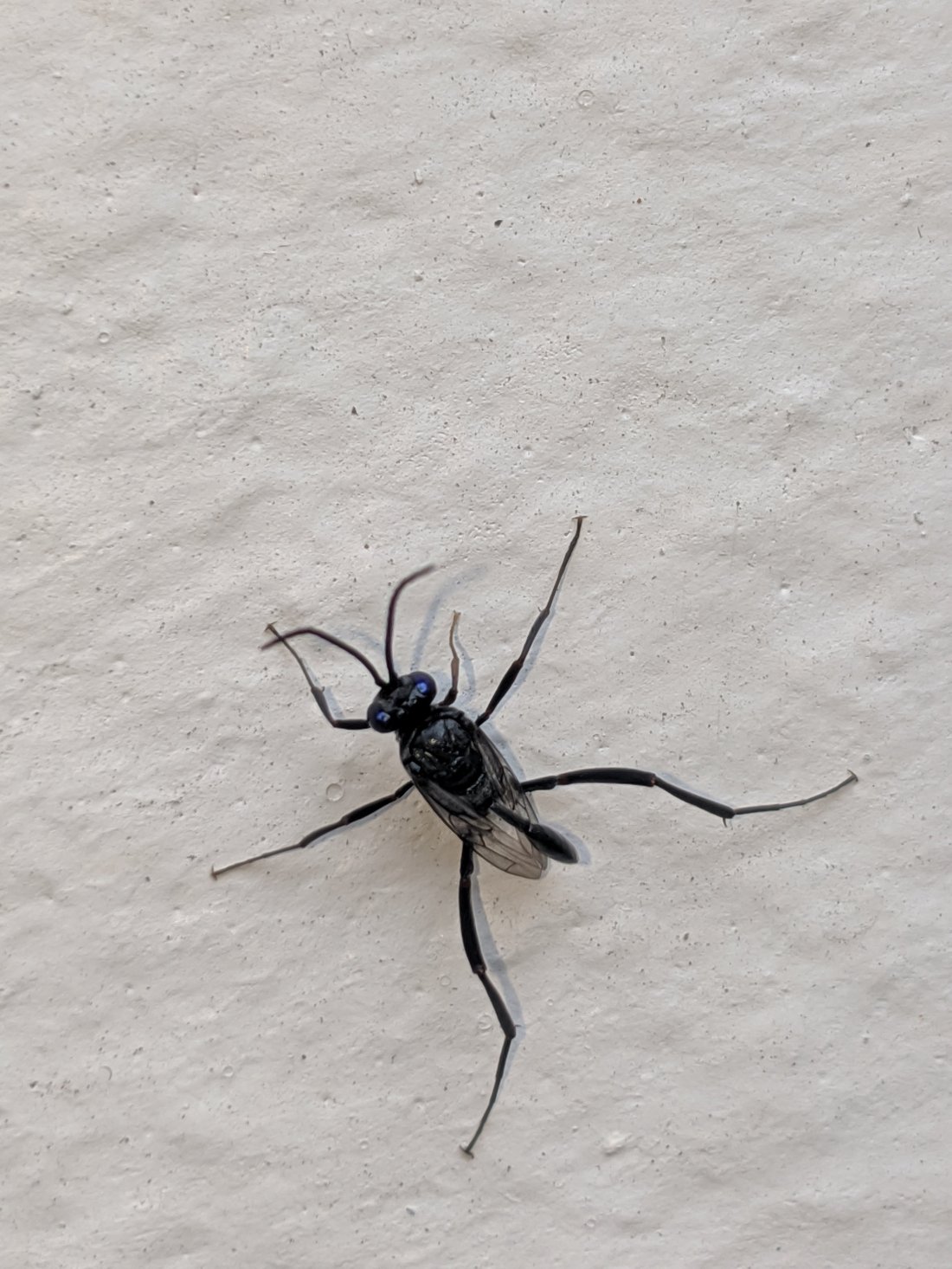
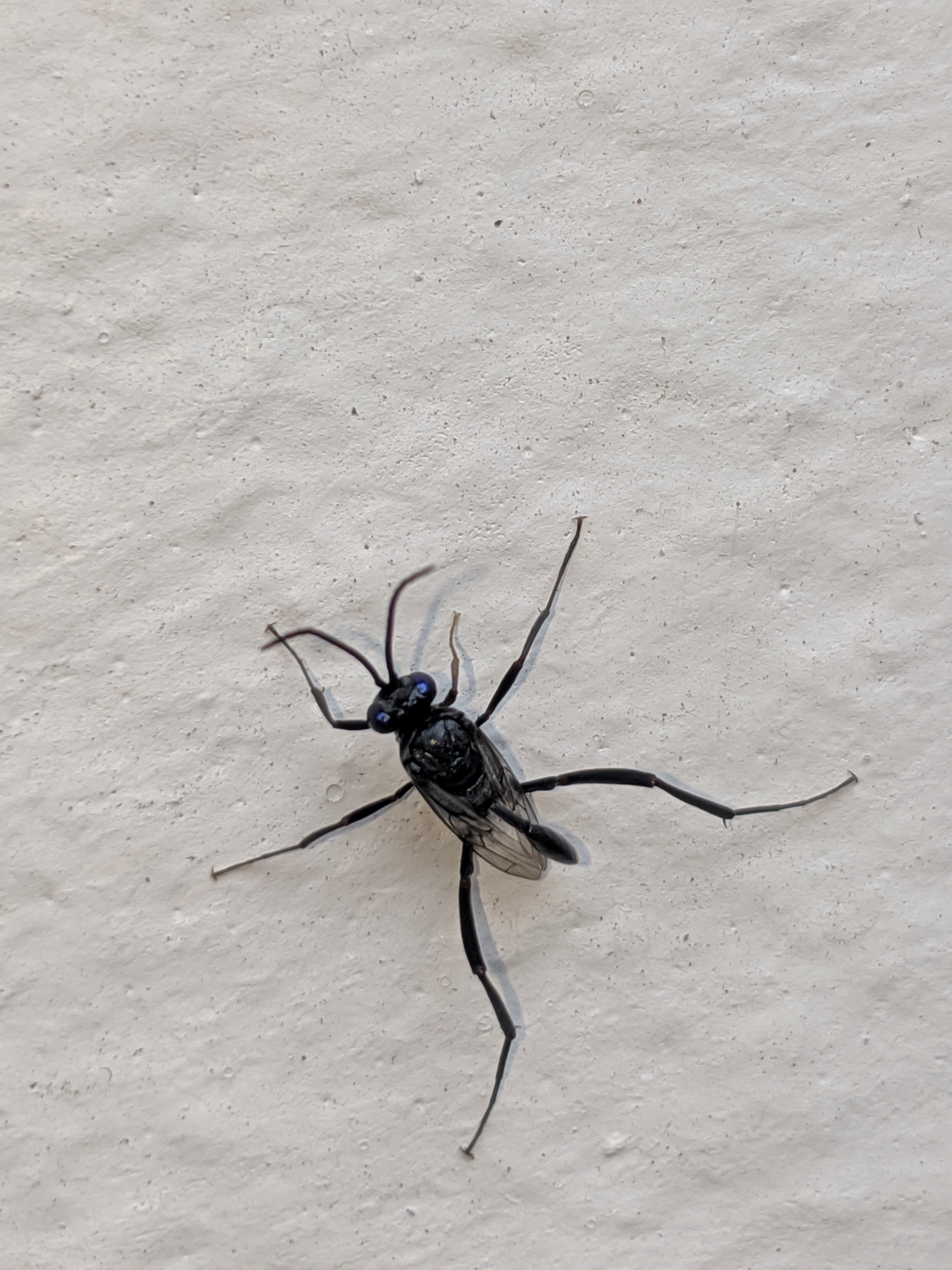
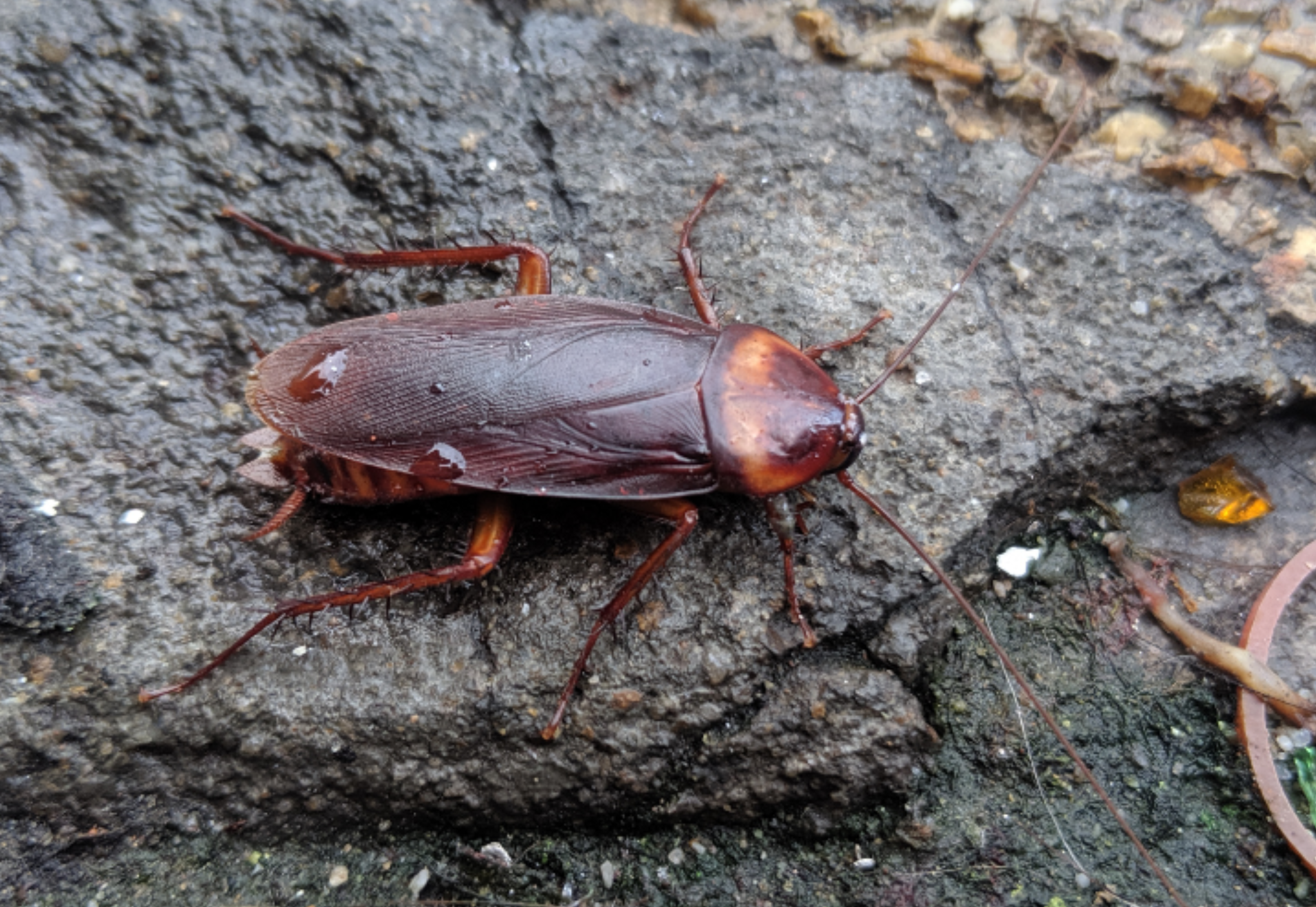
On the way, Matt was furiously taking pictures of every insect in sight. He was transported right back to his field course in India. We were greeted with an incredible find not even 5 minutes into the hike – a vinegaroon! Super cool. Along the river, we encountered a pair of women foraging river crabs. Got exchanged pleasantries with them and we were on our way.
Eventually, we encountered Thong Dee and her mahout (the elephants guide/trainer).
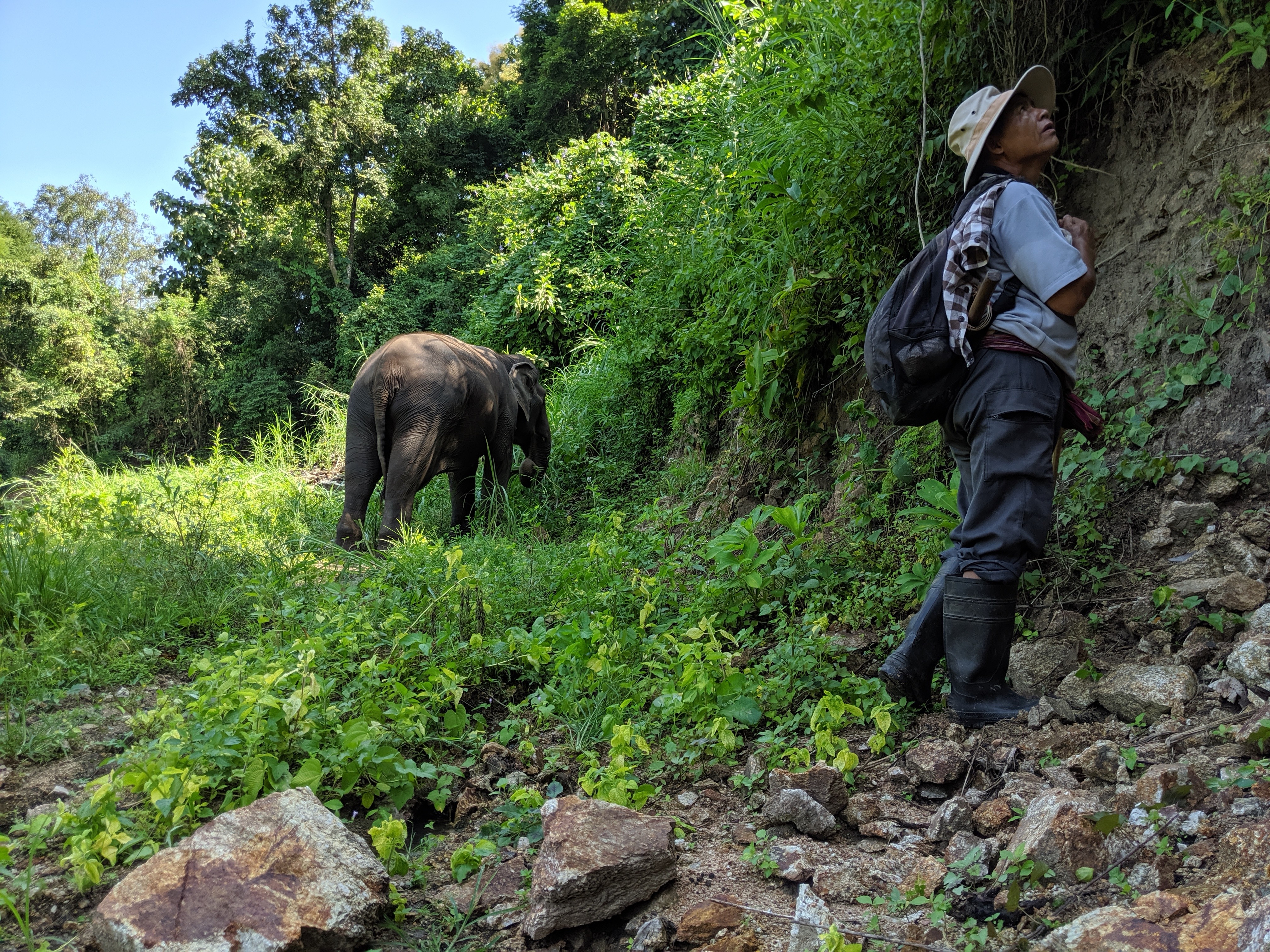
A rule at BEES is that tourists must remain 4 meters away at all times. We were keeping our distances, and Got motioned for Matt to get closer. While he was admiring Thong Dee, she suddenly picked up on a scent. She turned around, and began using her trunk to feel around Matt, eventually landing her trunk on his backpack. He was frozen and nervously laughing. She began to pull on his backpack with her trunk, as she knew there were some tasty banana treats in there. Got quickly intervened with a soft pat on her trunk and instructed Matt to swiftly dip underneath her trunk and back away. Although this seemed a little scary, the mahout did not even react and we were in no immediate danger. What a really cool experience and encounter. She was incredibly strong with her trunk – if she wanted to, she could have ripped my bag off my back but she used some restraint and went back to grazing after I moved out of the way.
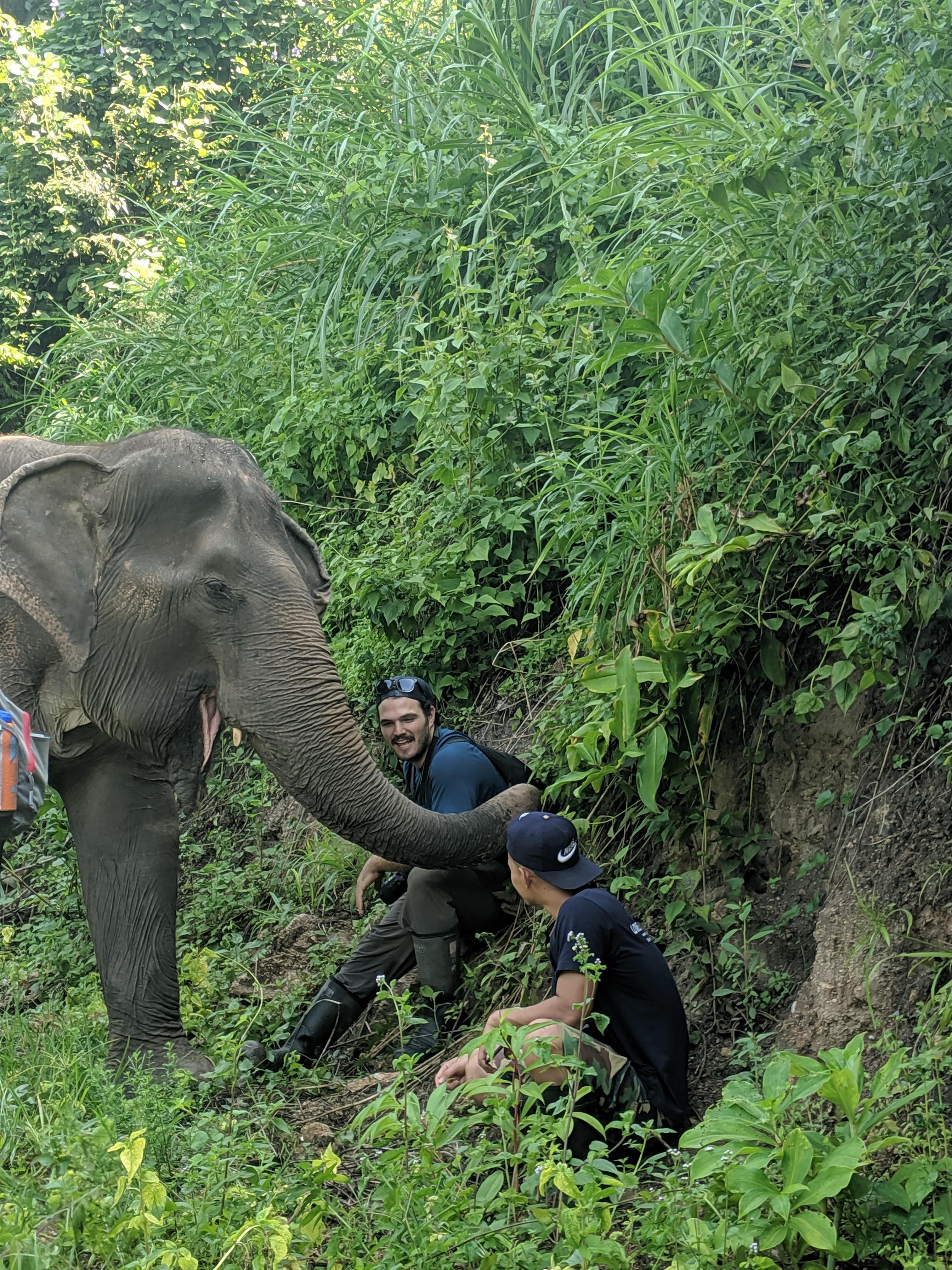
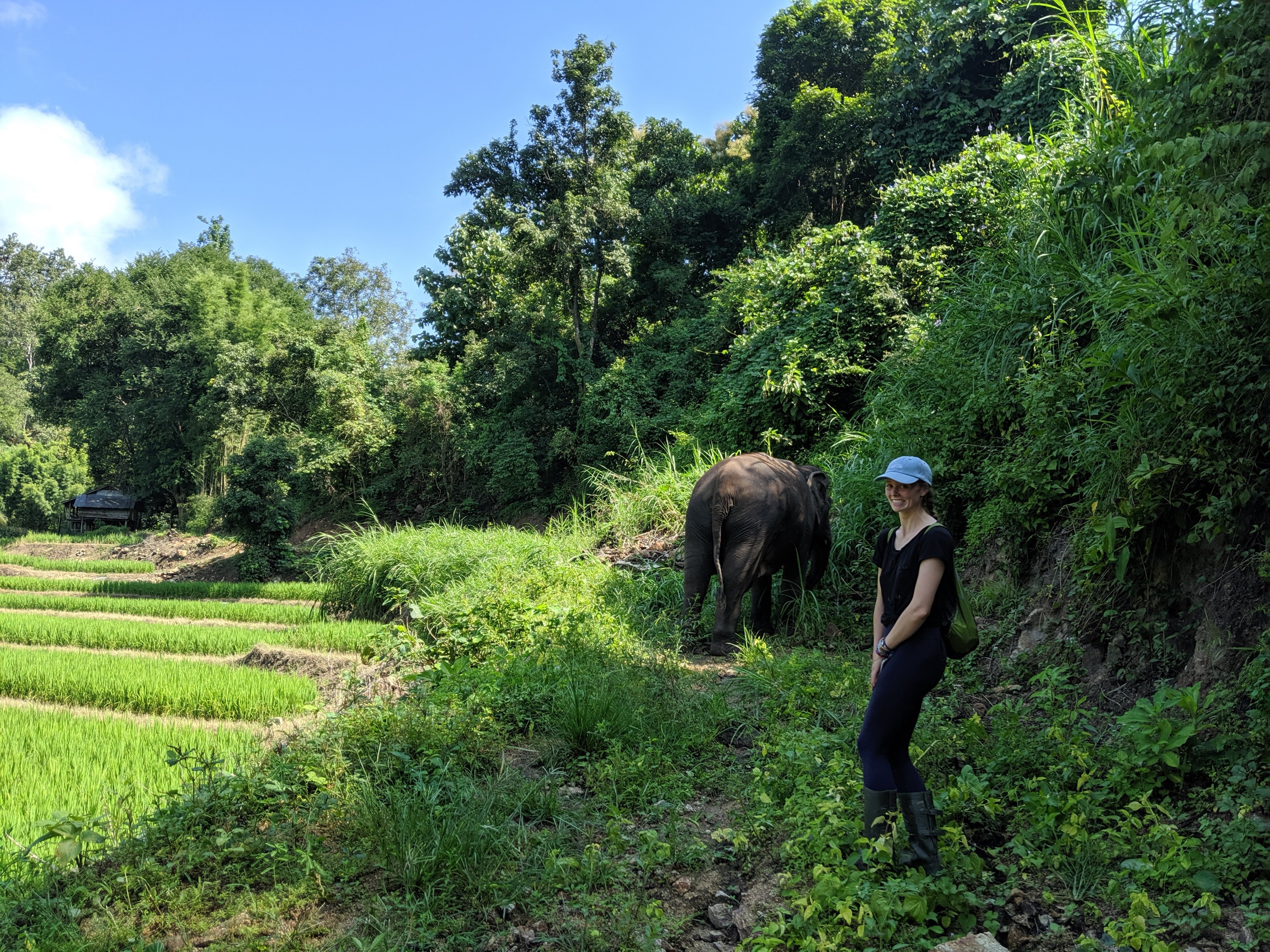
Each elephant at BEES has as assigned mahout, although mahouts are a controversial topic… Ky wrote a small blurb on this at the end of Day 1.
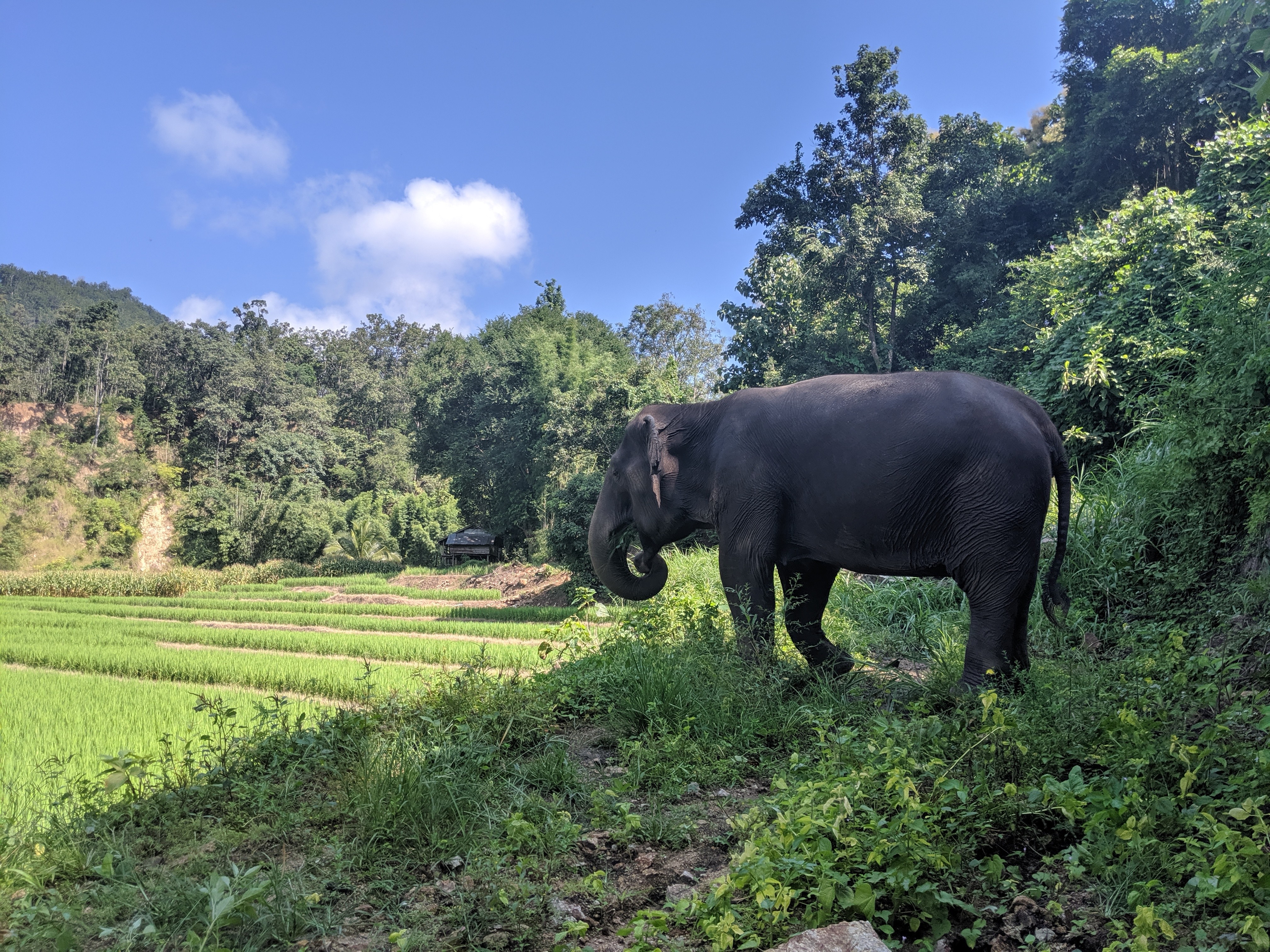
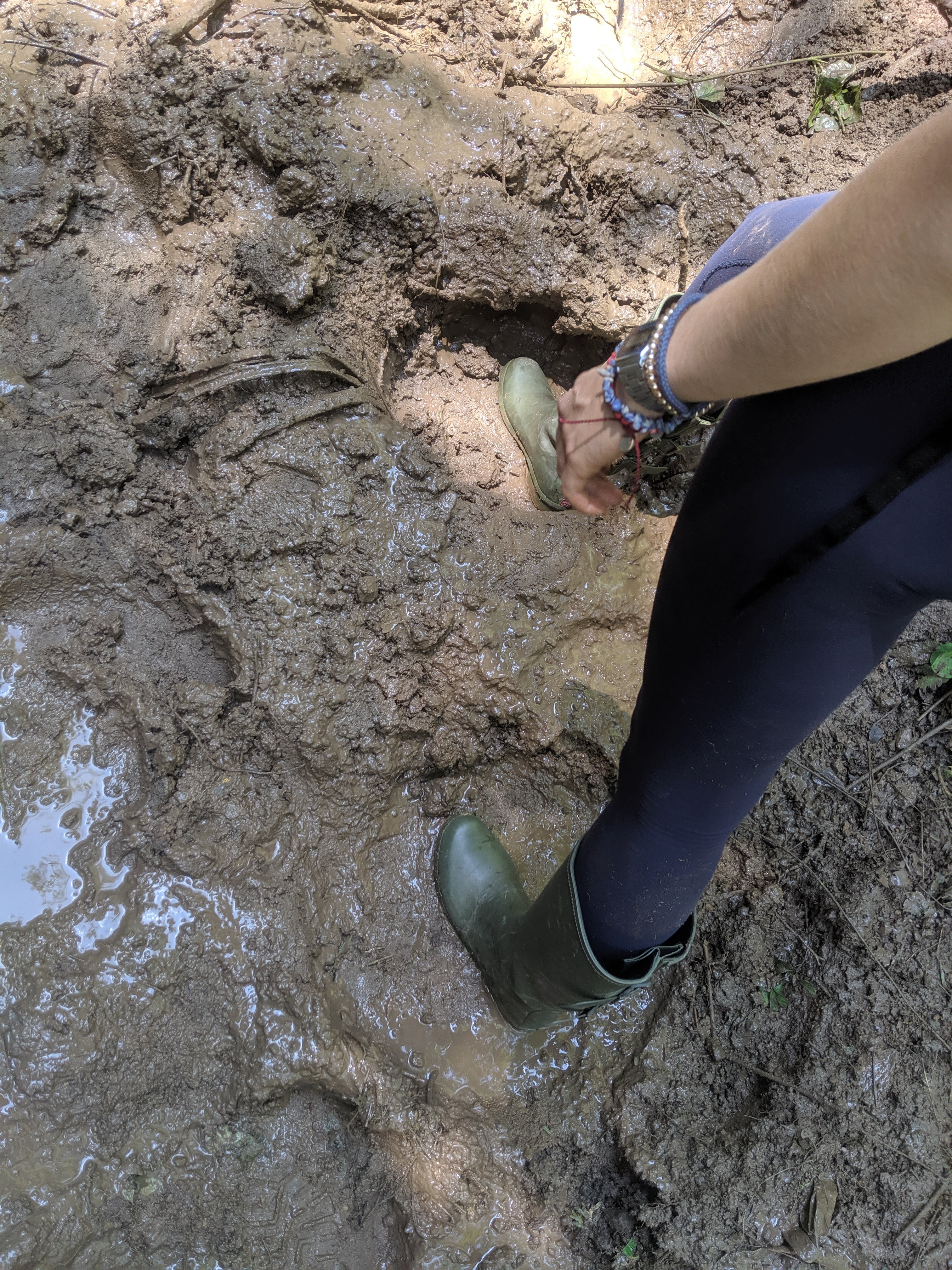
After our close encounter with Thong Dee, we decided to move on to find the other 2 elephants. When we found Mae Dok and Mae Kam along a stream (who by the way are BEST friends and are just absolutely in love with each other), they were grazing while their mahouts smoked banana leaf cigars. We followed the elephants up stream, and eventually stopped for lunch while the elephants stopped for a mud bath. It was interesting to watch the elephants make the consistency of mud they desired; they would stir up the mud with their trunks until it was a perfect blend.
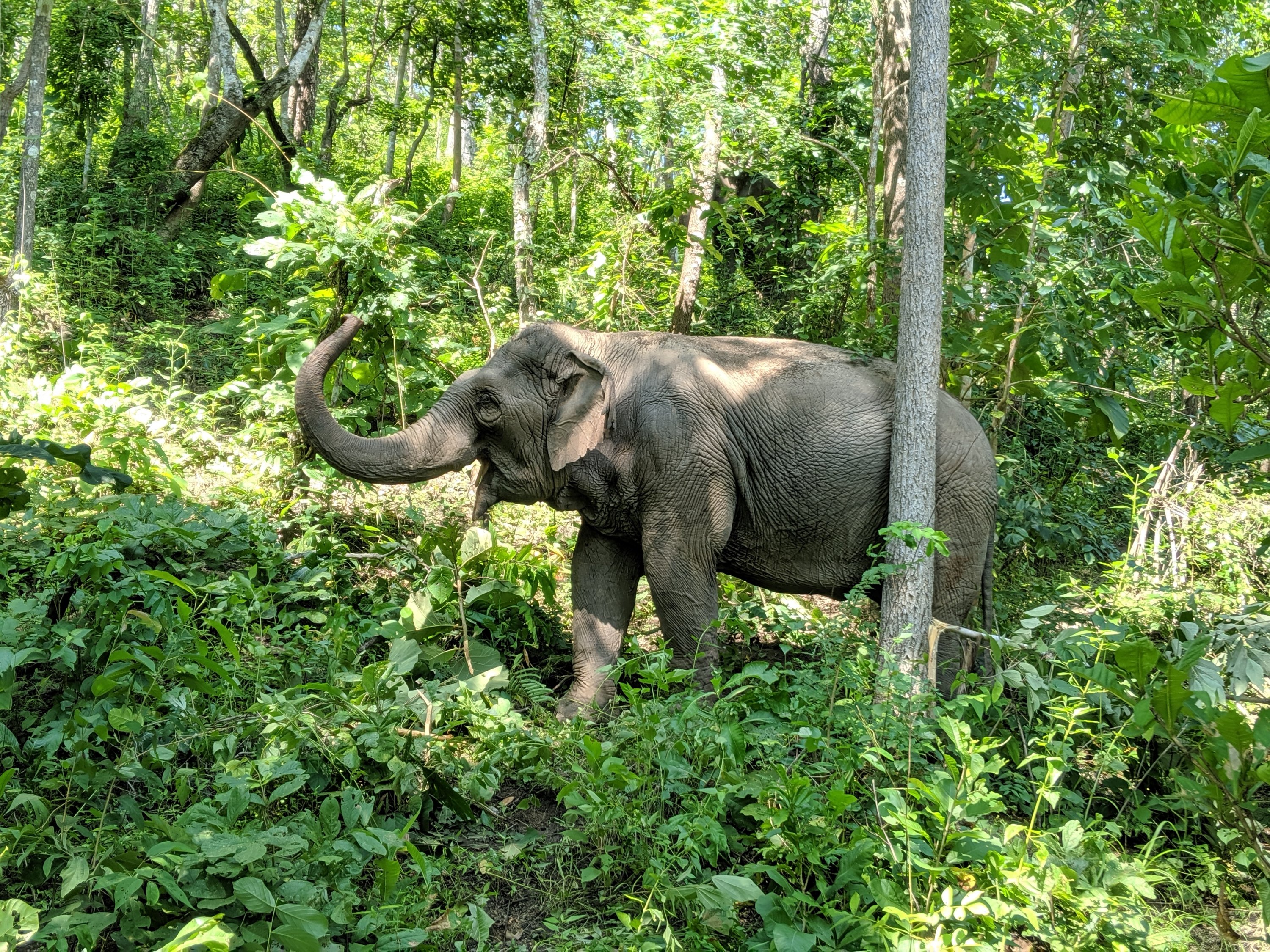
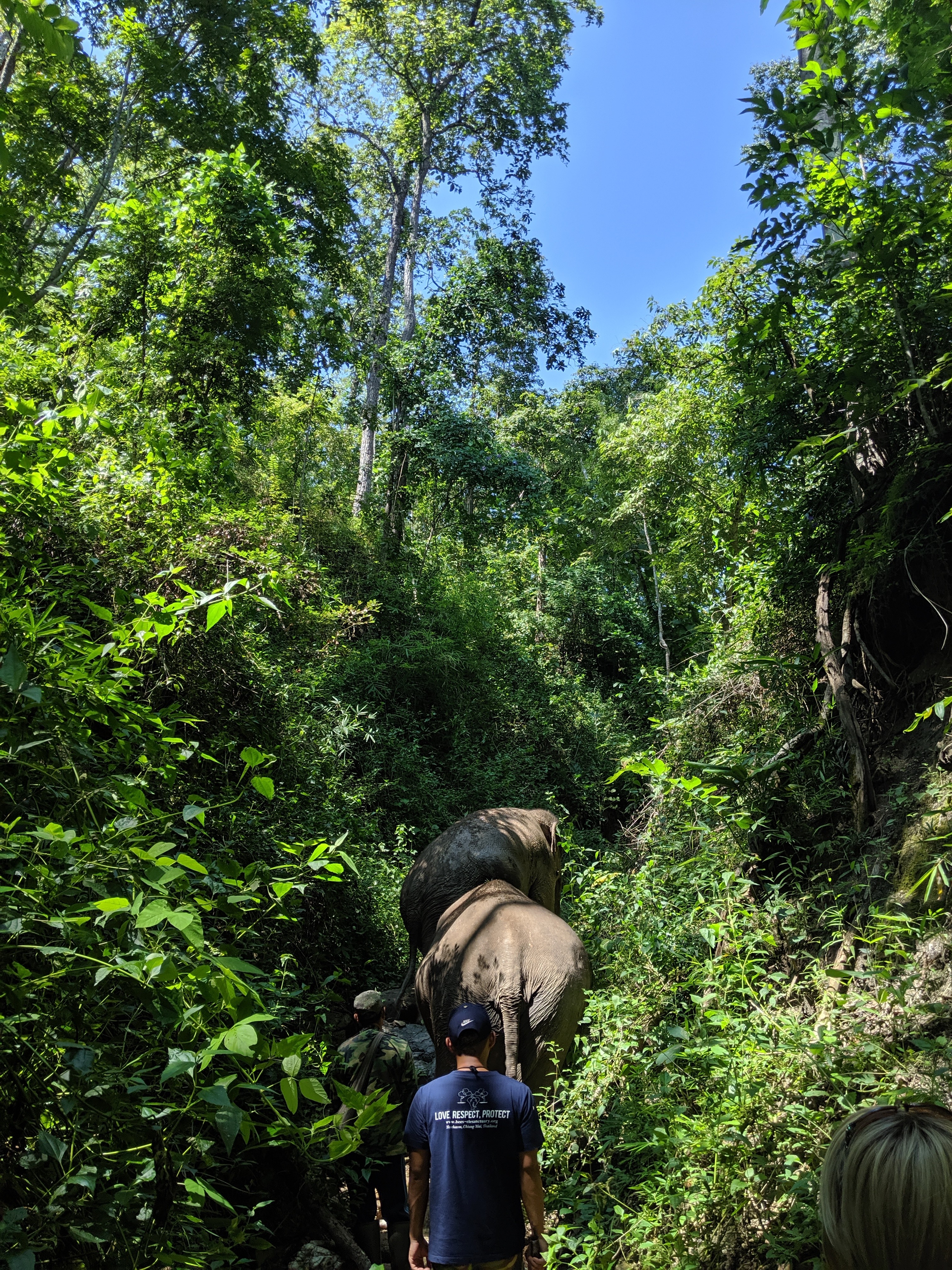
After lunch, we followed closely behind Mae Kam, who started to drift away a little from Mae Dok. Just as Chrissy was explaining to us how elephants communicate through rumbling vibrations and moaning, we heard Mae Kam let out a very low rumbling bellow. We did not think much of it, but Got immediately recognized that she was calling for her BFF Mae Dok. The following events took place in what felt like a split second. Got quickly moved us out of the paths of the 2 elephants because he sensed something was going to happen. Just as we ducked under the cover of some bamboo, Mae Kam let out the MOST powerful trumpet we have ever heard. We are both getting goosebumps just writing about it. It was INCREDIBLE – the jungle floor shook, and Mae Dok came galloping up the hill towards her friend Mae Kam. Within 4 elephant strides, she was the top of a 50-60m hill. They embraced each other with their trunks, and went back to grazing. Chrissy and Got informed us that Mae Kam just thought she had lost Mae Dok as she couldn’t see her and wanted to know where she was. After this exhilarating moment, Got decided it was time to head home. We had been hiking for over 6 hours so we figured it was time too.
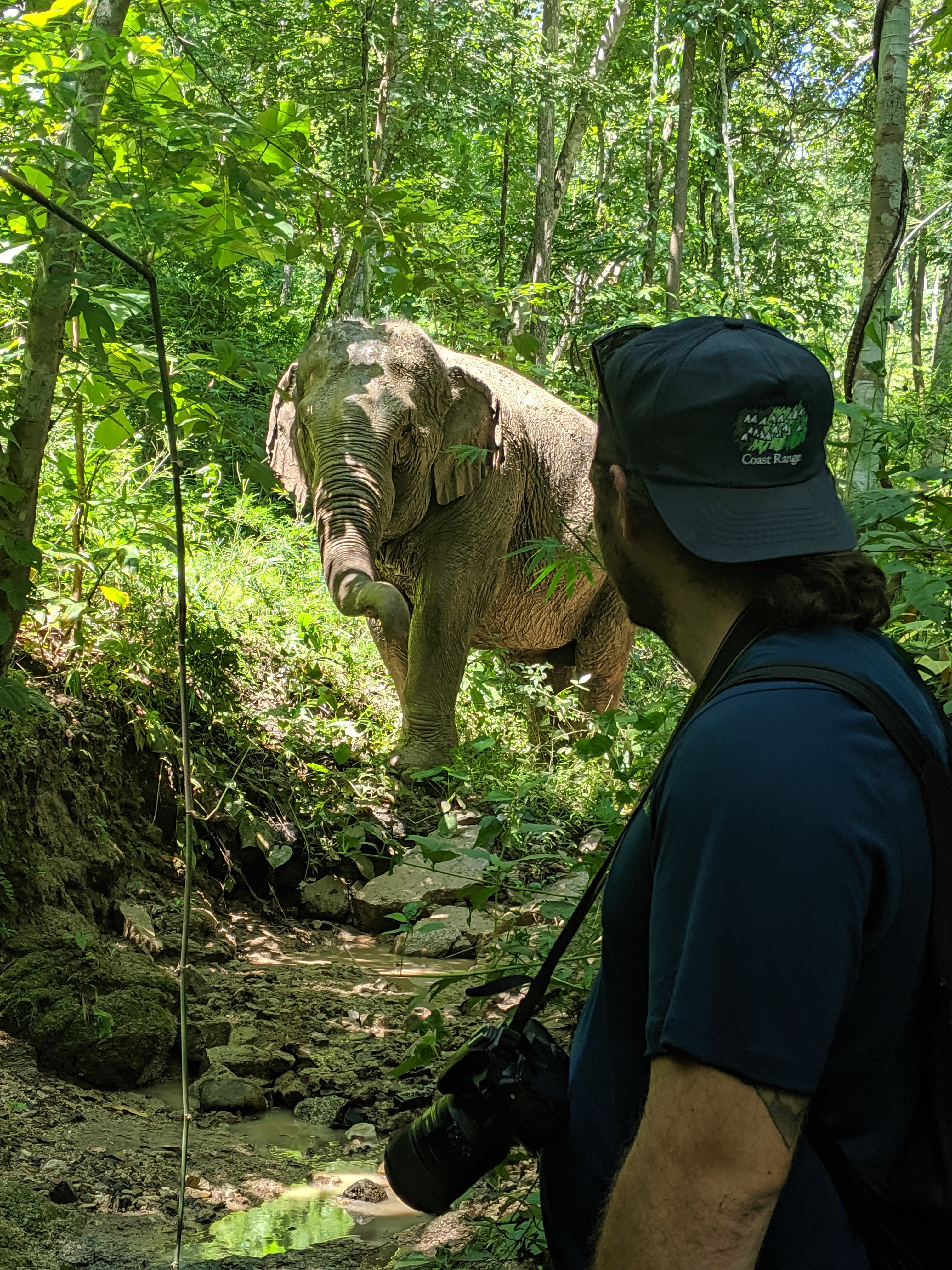
That evening, we again prepared elephant treats and fed them. We were expecting to head back to dinner when we received an invitation from Burm, Emily’s husband and Mae Cham local, to go and pick up some banana trees from the temple. We obliged and hopped in the back of the truck, eager to see more of the village and lend a helping hand. We picked up 6 juvenile banana trees that had been dug up, and headed back to BEES to replant them on the property. On the way back, Burm stopped at a local hot spring. It was very small, but very beautiful, and it was here that Burm opened up about the legacy he has developed in Mae Cham and his journey to where he is now. He grew up as a novice monk in Mae Chaem, but moved to Chiang Mai as a young adult to work as tour guide to improve his English and make some money. Upon his return to Mae Chaem, he used his earnings to help develop the local temple for his community because the temple they had been using was much too far and many of the elderly people could not make the trip. Burm struck us as an incredibly humble man who was passionate about his village and preserving culture and the environment.
After we had returned to BEES and planted the trees, Burm and his 19 year old cousin Em (who also works at BEES) invited us to go play soccer with some of the local kids. We agreed, and he suggested we jog there! It was about 2 km, but because of the crazy humidity we were both drenched by the time we got there. Once we got to the temple, about 15 teennage boys arrived on their motorbikes. We played BEES sanctuary vs everyone else, which was about 5 vs 15. Kylie was the only girl! And she definitely surprised some of the guys by just showing up. We played until sundown, and then ran home to a delicious dinner. We passed out by 8:30 pm shortly afterwards. Hands down the best day of our trip so far.
A quick note from Ky on the elephant-mahout relationship: Traditionally, elephants were put to work in the logging industry. However in 1989 logging was banned forcing approximately 3,000 elephants to work in the tourism industry. Since then, there has been a growing demand for elephant entertainment in the tourism industry. Many mahouts lack proper training and become a mahout as they believe it can be a relatively easy way to pay the bills – give commands, give punishment if the commands are followed, train the elephant to fear the consequences if they don’t listen to a command. Common training tools are the use of bullhooks, whips, metal rods and machetes. Much of this ‘training’ happens when tourists aren’t around so when they are, just the mere presence of the mahout is terrifying enough for the elephant to listen to the command. If an elephant doesn’t listen and the mahout doesn’t follow through with a punishment, it jeapordizes the future safety of the mahout and tourists. Currently in the tourism industry, mahouts are experiencing low pay for a high-risk job with many suffering injuries and having little financial security. Unfortunately the death toll of mahout’s is higher than we care to share. Even with this knowledge, many companies still advertise riding, brushing, hand-feeding and bathing which all require a lot of training. These are not intuitive activities for the elephants to preform, especially with tourists being involved. Elephants are much safer and happier when they’re not in direct contact with tourists. This also makes life safer for mahouts who do not have to resort to cruel methods to control them. Alternatively at BEES, mahouts do not even carry training tools and tourists are strictly prohibited from touching the elephants. The mahout’s are only using voice commands and positive reinforcement (i.e. high reward treats) to guide the elephants home from the jungle at the end of each day. At BEEs the elephants are are actually given a choice. They can choose whether they want to listen or not which can make for some funny arguments between the mahout and elephant.
SECOND FULL DAY
On our second day, we were put to work. We woke up at 7am, pet some of the pups, and sipped our coffee with the kitties in the cafe.
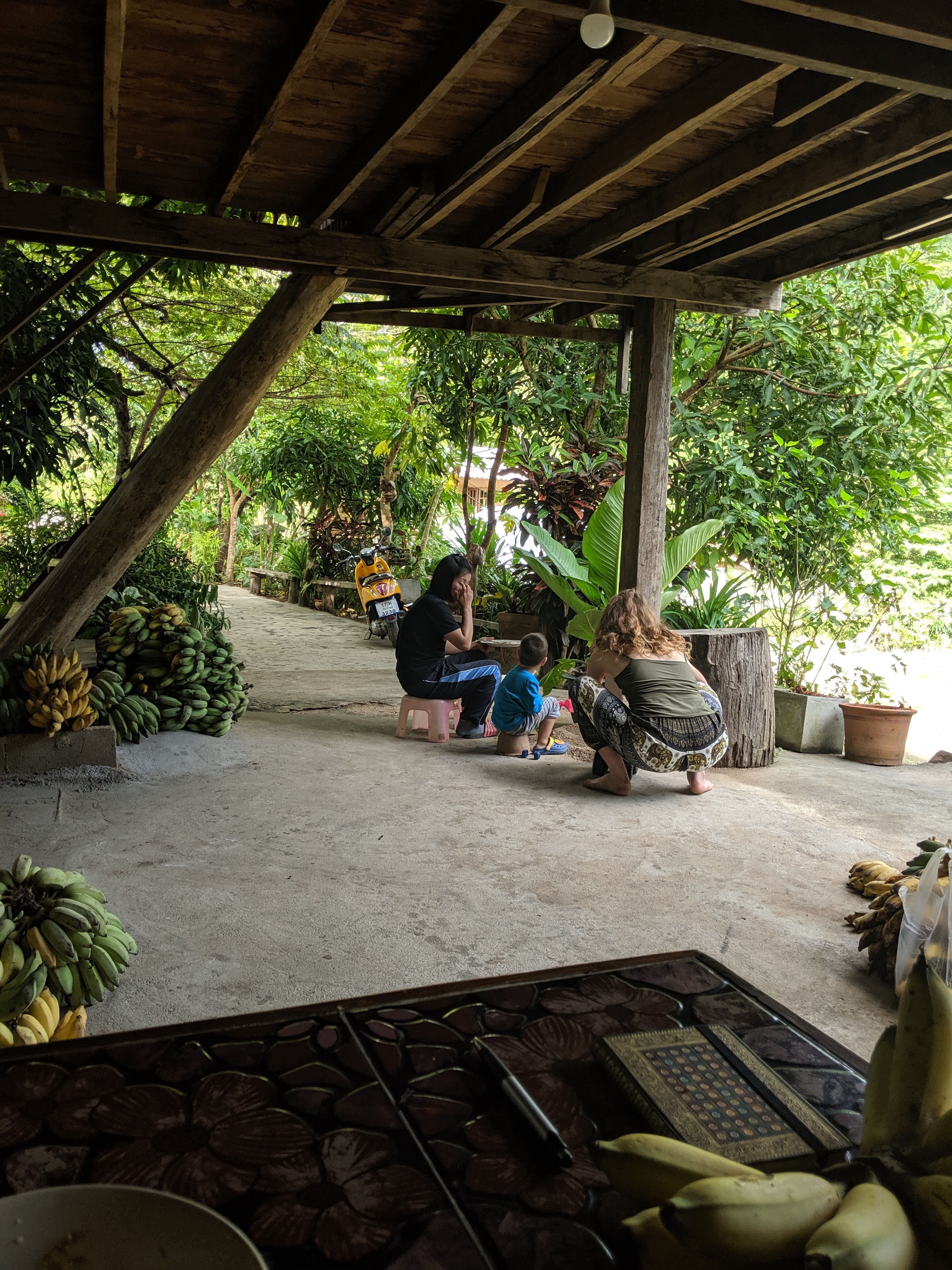
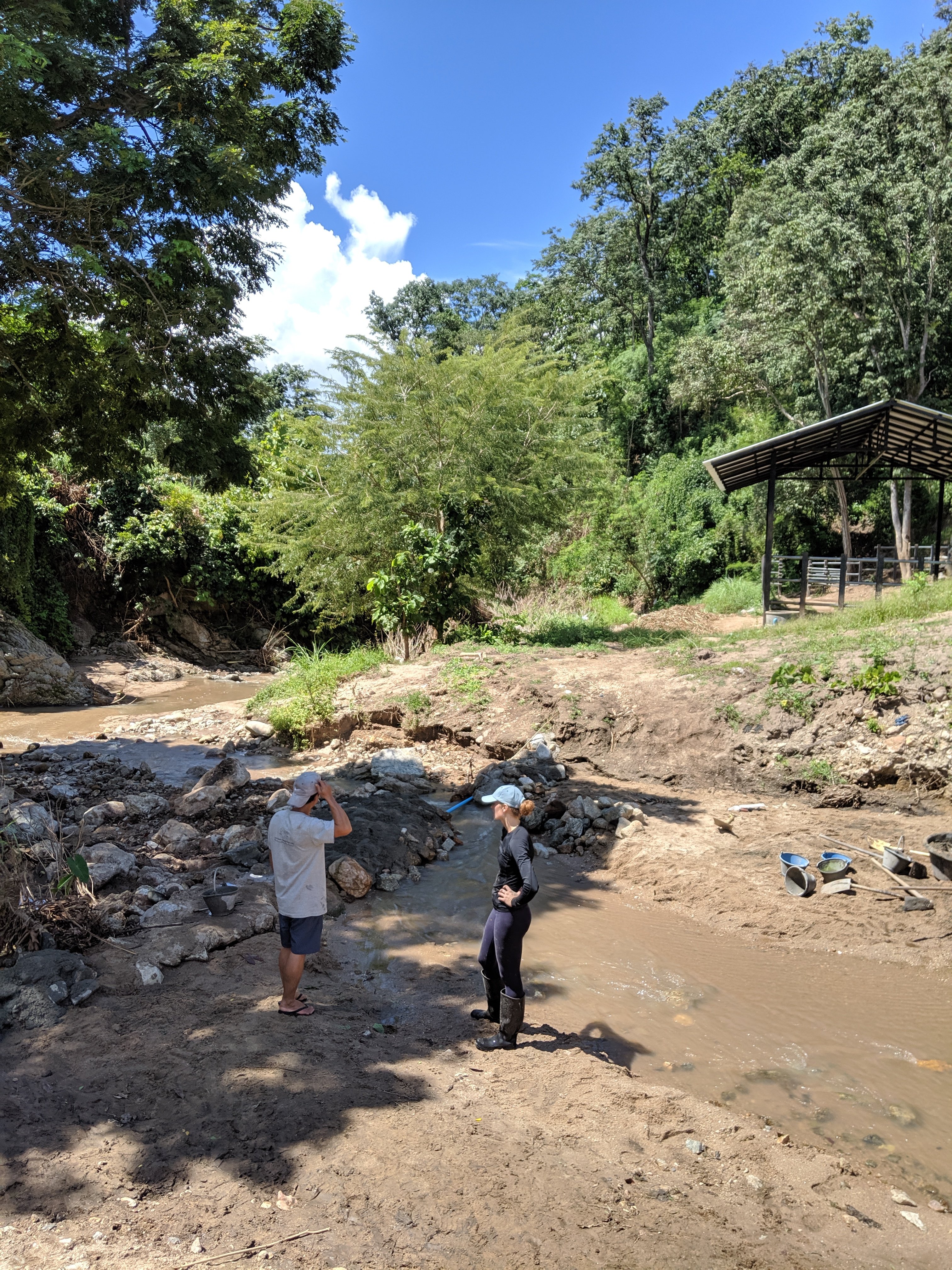
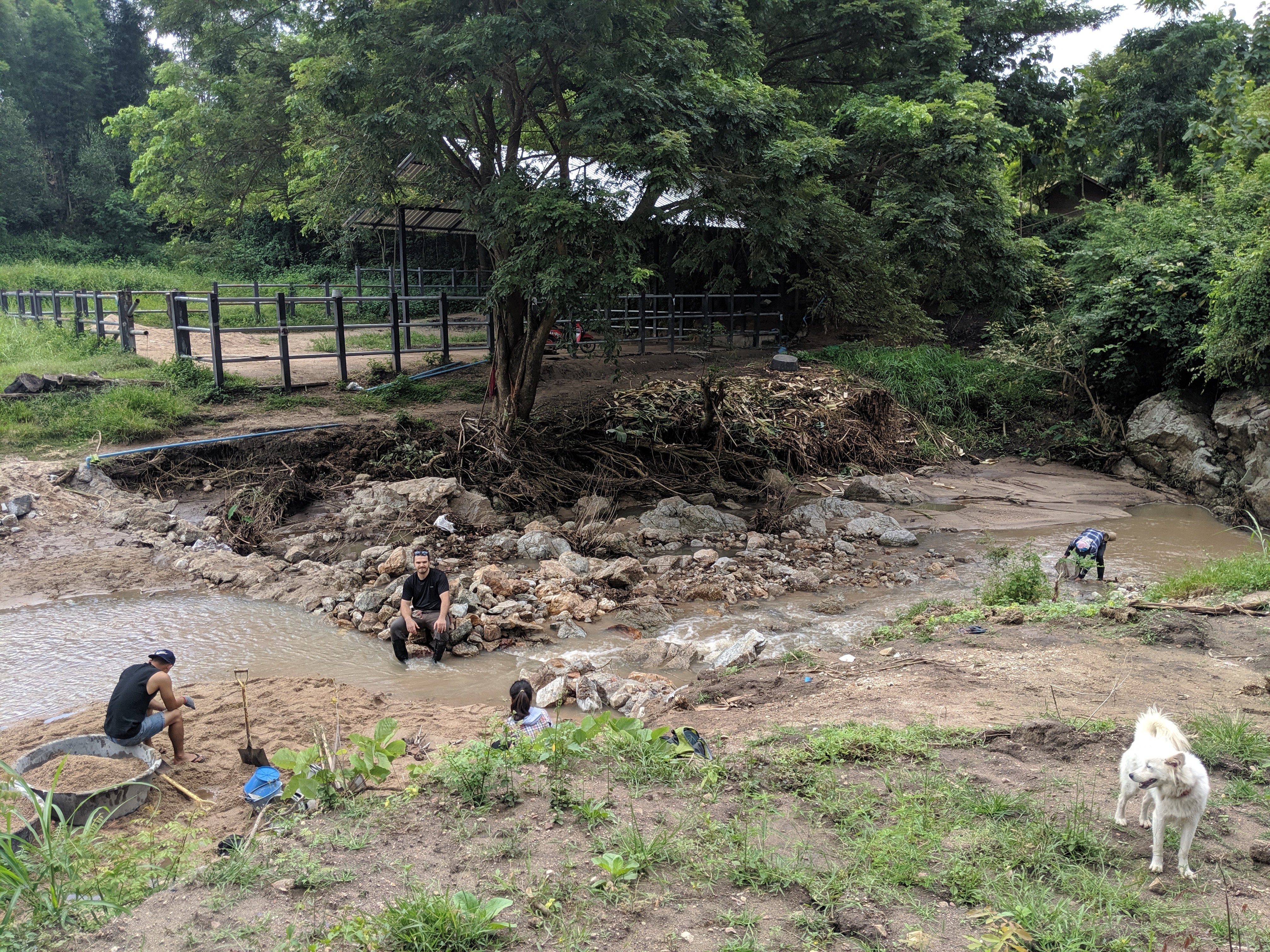
Instead of following the elephants, we worked on some odd jobs. We started by shovelling elephant poop into wheelbarrows and filling up pee-spots (which were mini lakes) with fresh sand. Then, we started collected big rocks in the river and stacking them across a section of the river. The past rainy season caused excessive flooding like BEES has not seen before, and knocked down their water barrier which helps to control flow so the elephant paddocks do not flood. We worked for a few hours just moving rocks, until bags of cement mix showed up. We mixed cement with sand and water from the river and created an assembly line to pass buckets of cement to pour over the rock wall we had built. Everyone at BEES (except for the mahouts) was helping. This wall has been rebuilt 2-3 times a year, but Burm thinks that the wall we assisted in building should last at least 8 months!
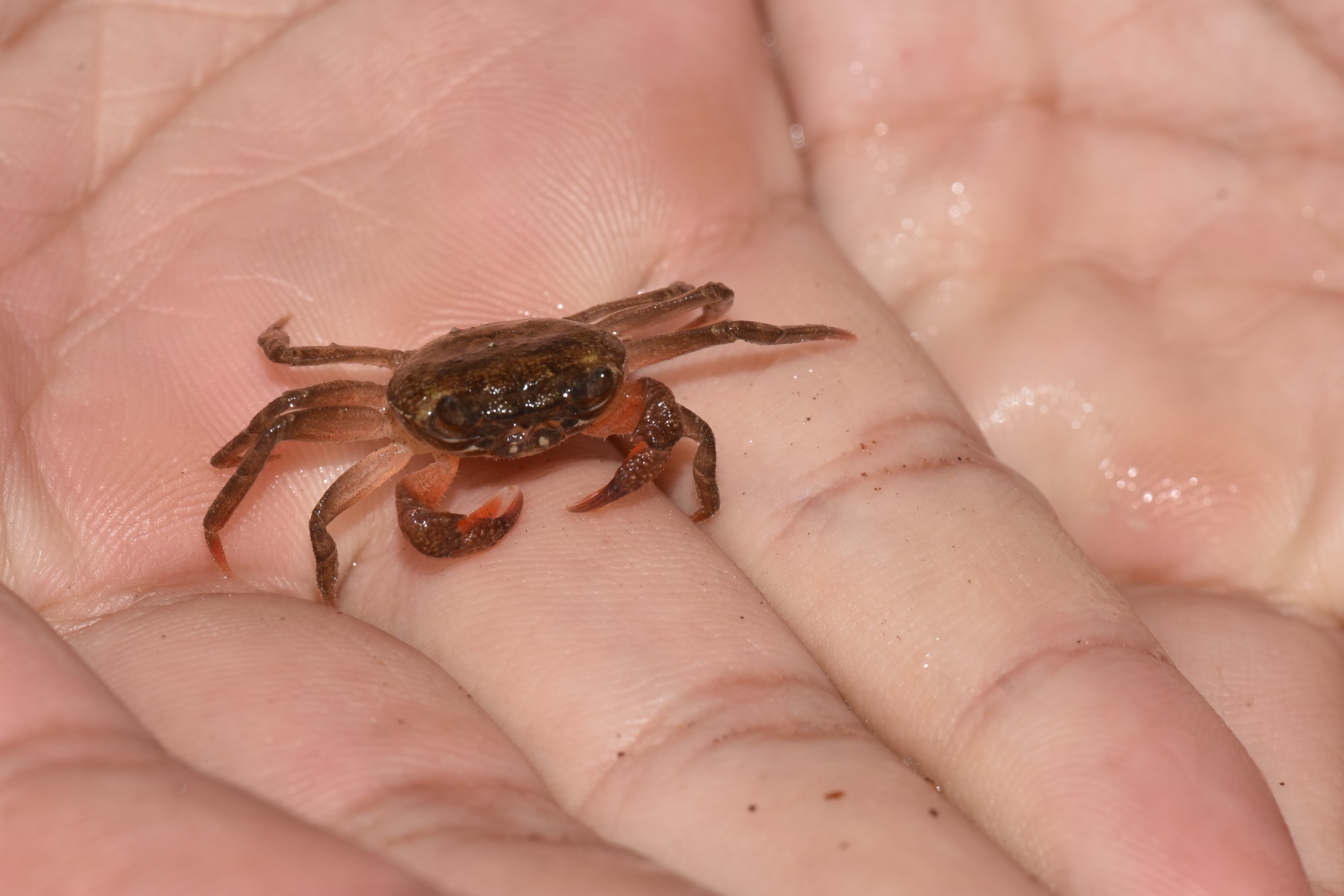
During the wall building, the employees took urns scavenging for river goodies, I.e. Fish, crab, and eel. Kylie, much to her chagrin, turned out to be an excellent river harvester and found multiple crabs and one palm sized eel! All catches were placed into bamboo baskets and cooked into a stew for lunch.
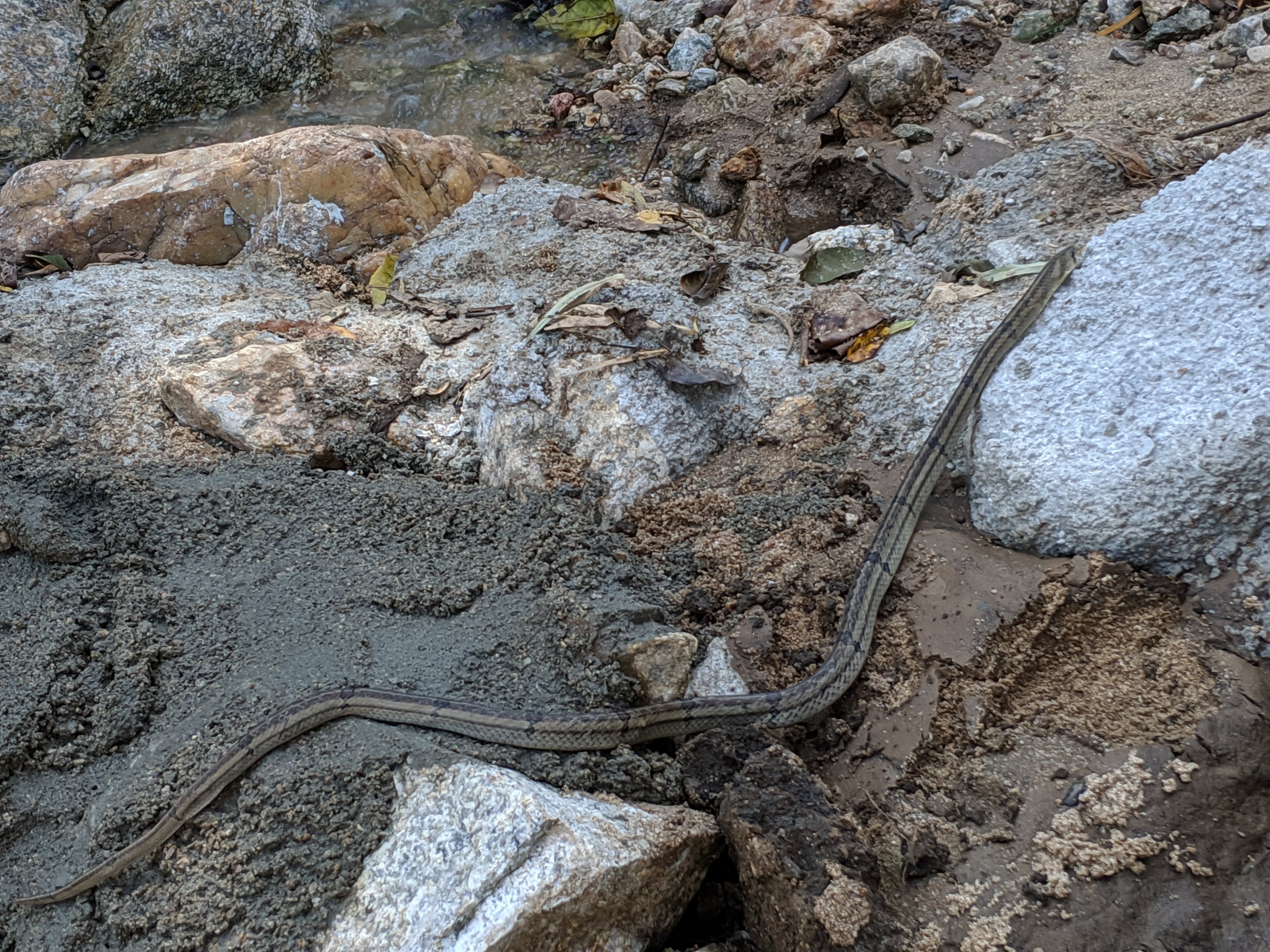
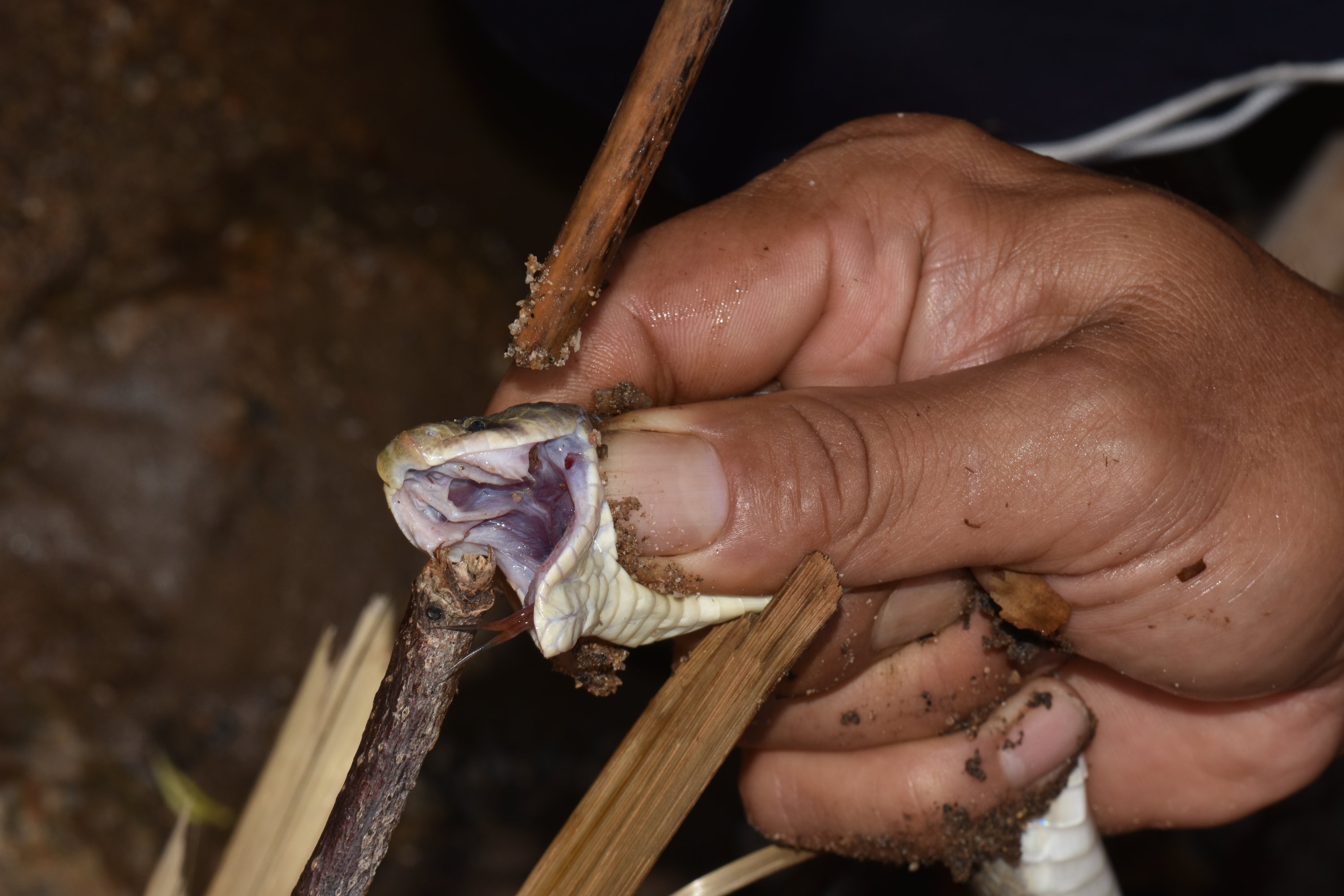
While we were taking a short break and waiting for more cement, Matt noticed out of the corner of his eye a 4.5 ft long snake slithering along the riverbank! We think we had taken a rock that was covering its den and had disturbed it. Matt pointed it out, all of the women (except for Kylie) ran screaming their heads off and got as far away as possible. Matt grabbed his camera and got closer. Burm and Em grabbed sticks of bamboo, and expertly pinned it against the sandbank just below its head. Once it was immbolized, Burm grabbed it with his bare hands and Em proceed to try and trigge the snake to bite the bamboo to see if it was venomous. The snake did not try to strike and its teeth were fairly small and slow to come out, leading us to believe it was not very dangerous but no one wanted to take that chance! Burm put it into a plastic bag, and we drove it 20 minutes away from BEES and released it.
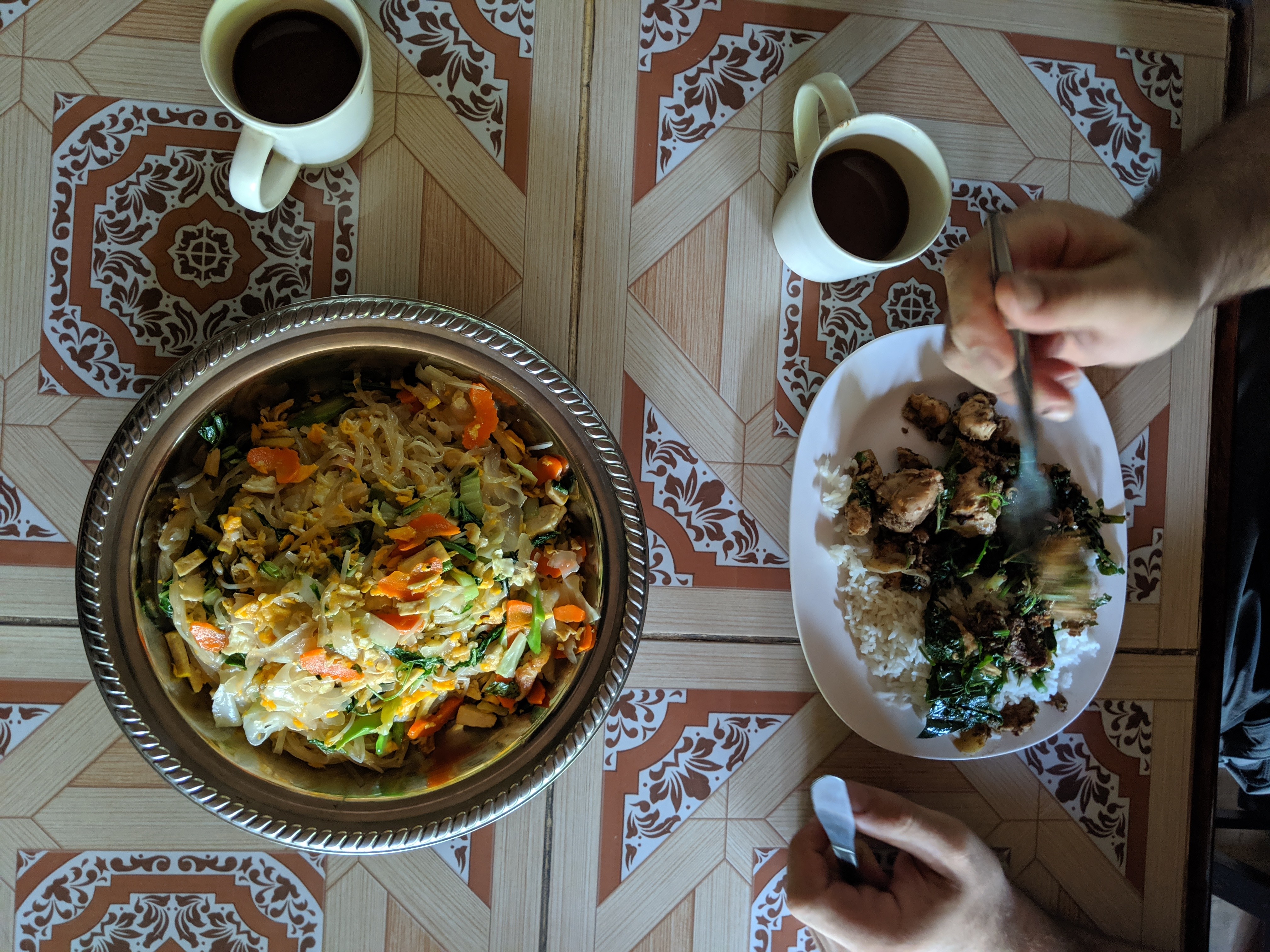
Upon return, we feasted on lunch. The staff ate lunch with us that day, and it felt special; it felt like we were part of their community. It was also CRAZY spicy, even Got was sweating while eating. But spicy = strong, and that’s what needed for a day of hard work.
After lunch, we had about an hour of free time. Most of the staff took naps, Matt looked for bugs, and Kylie pet the cats. We returned after lunch and were told to prepare elephant treats, which we were professionals at by now.
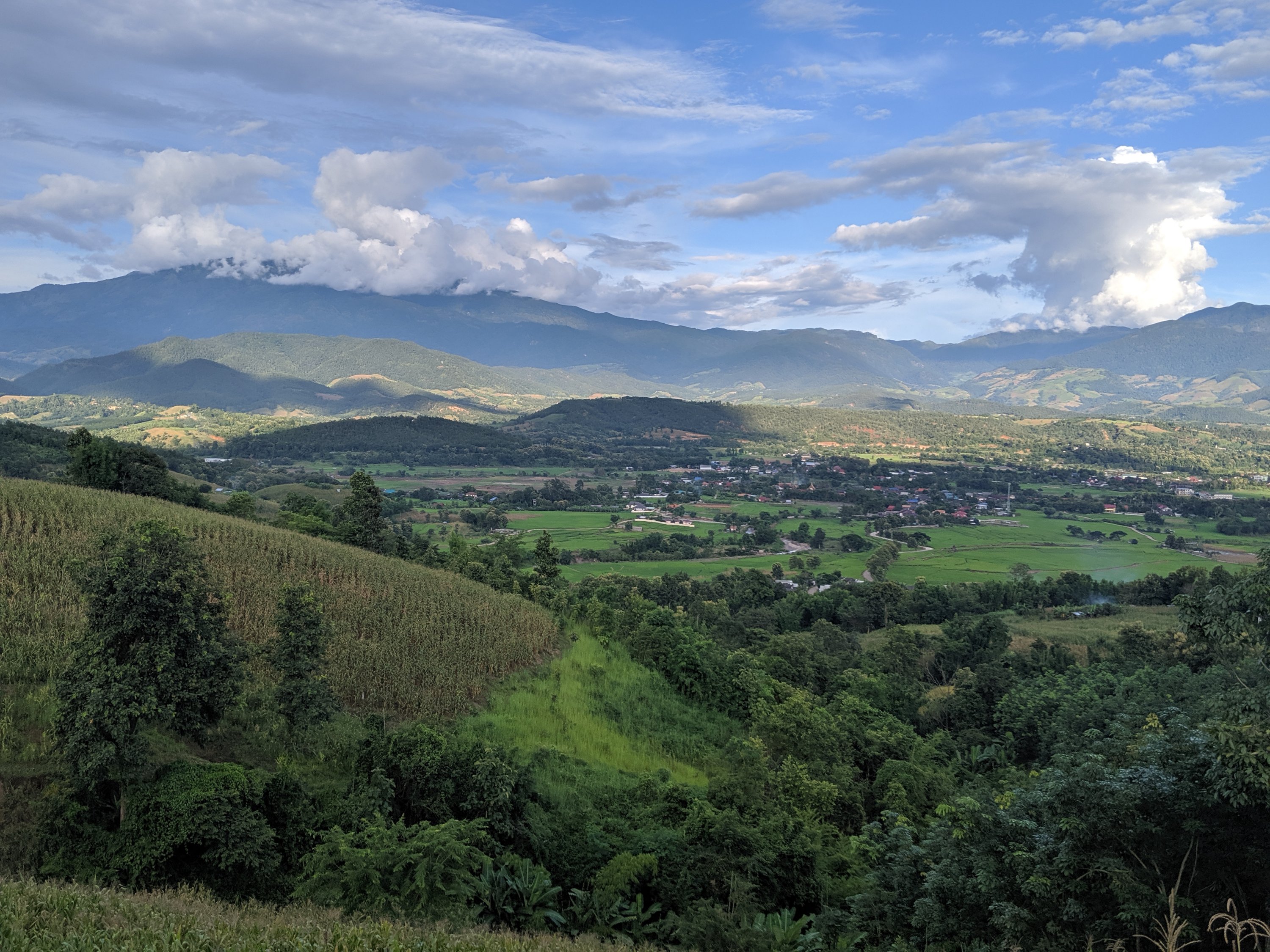
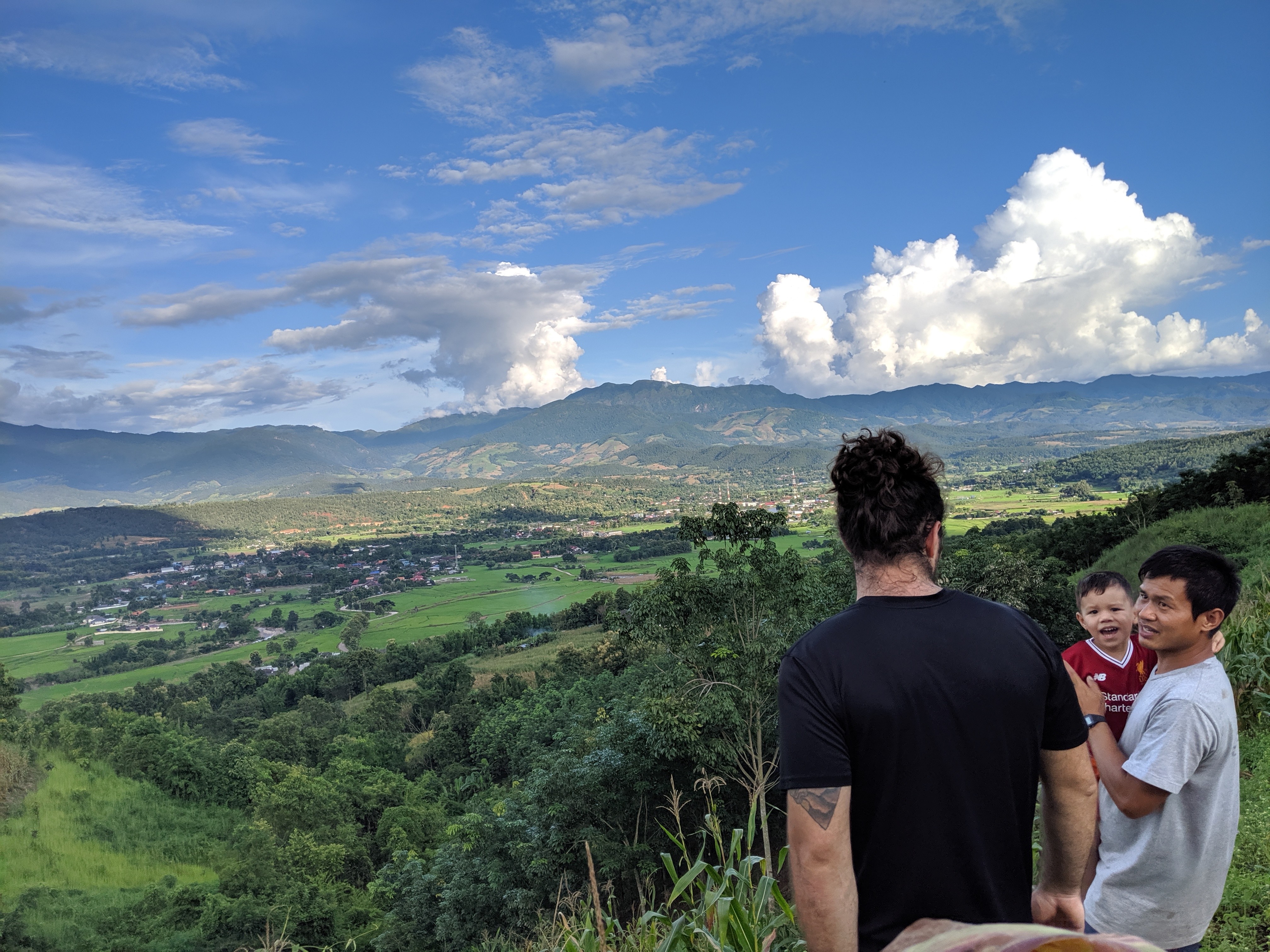
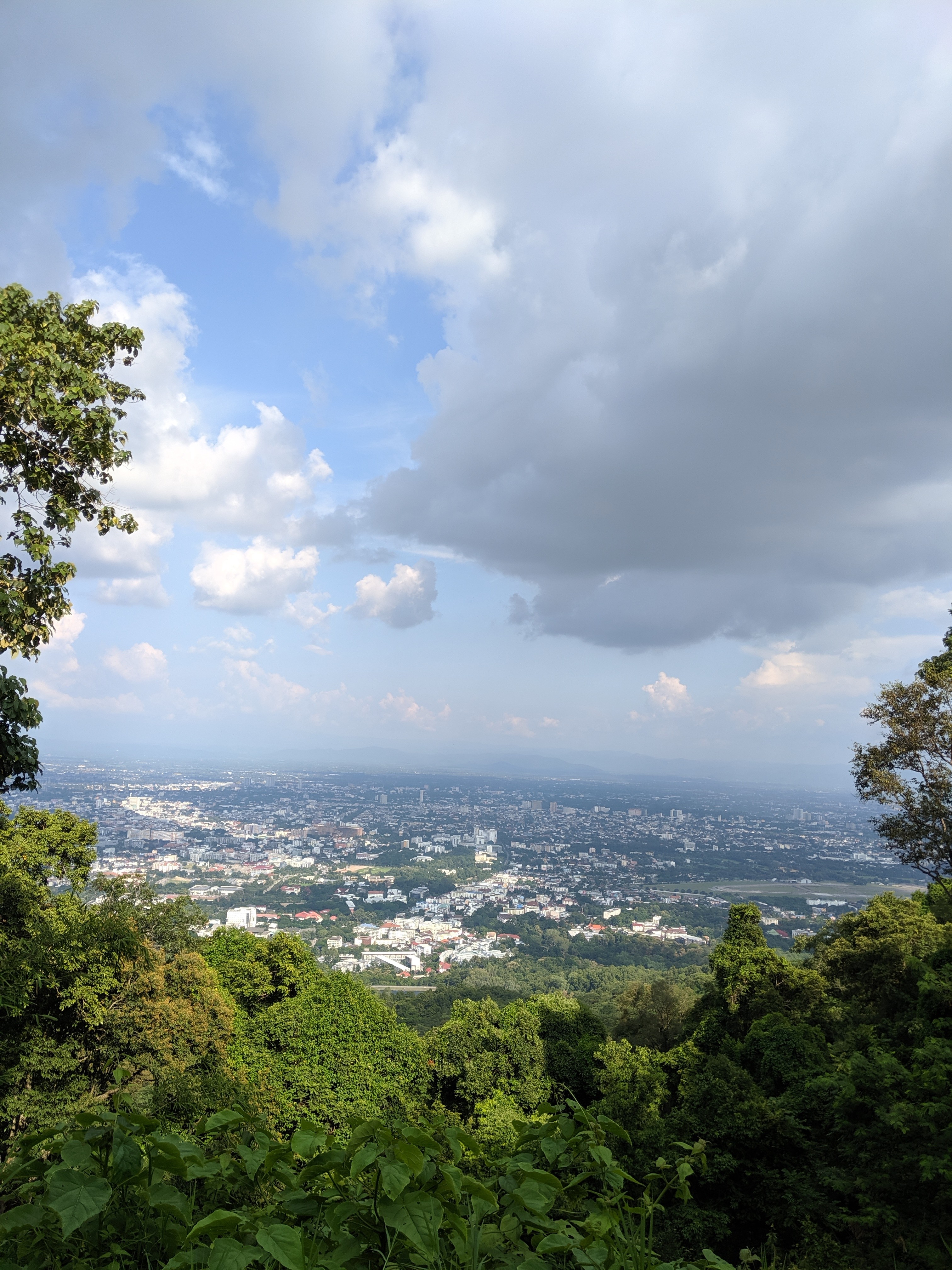
Before dinner, Burm toured us around the village – he took us to some of his favourite spots, including a look out of Mae Chaem, a pond, a natural spring, and finally, to get some delicious street roti! It was completely different from the roti we are used to back home – it is essentially a crepe with egg, super sweet and oily, and melt in your mouth delicious!
That evening, we had our last dinner with Chrissy and retired to the kitty cafe. Just when we thought the fun was over… Tan emerged with his bin of rhinoceros beetles!
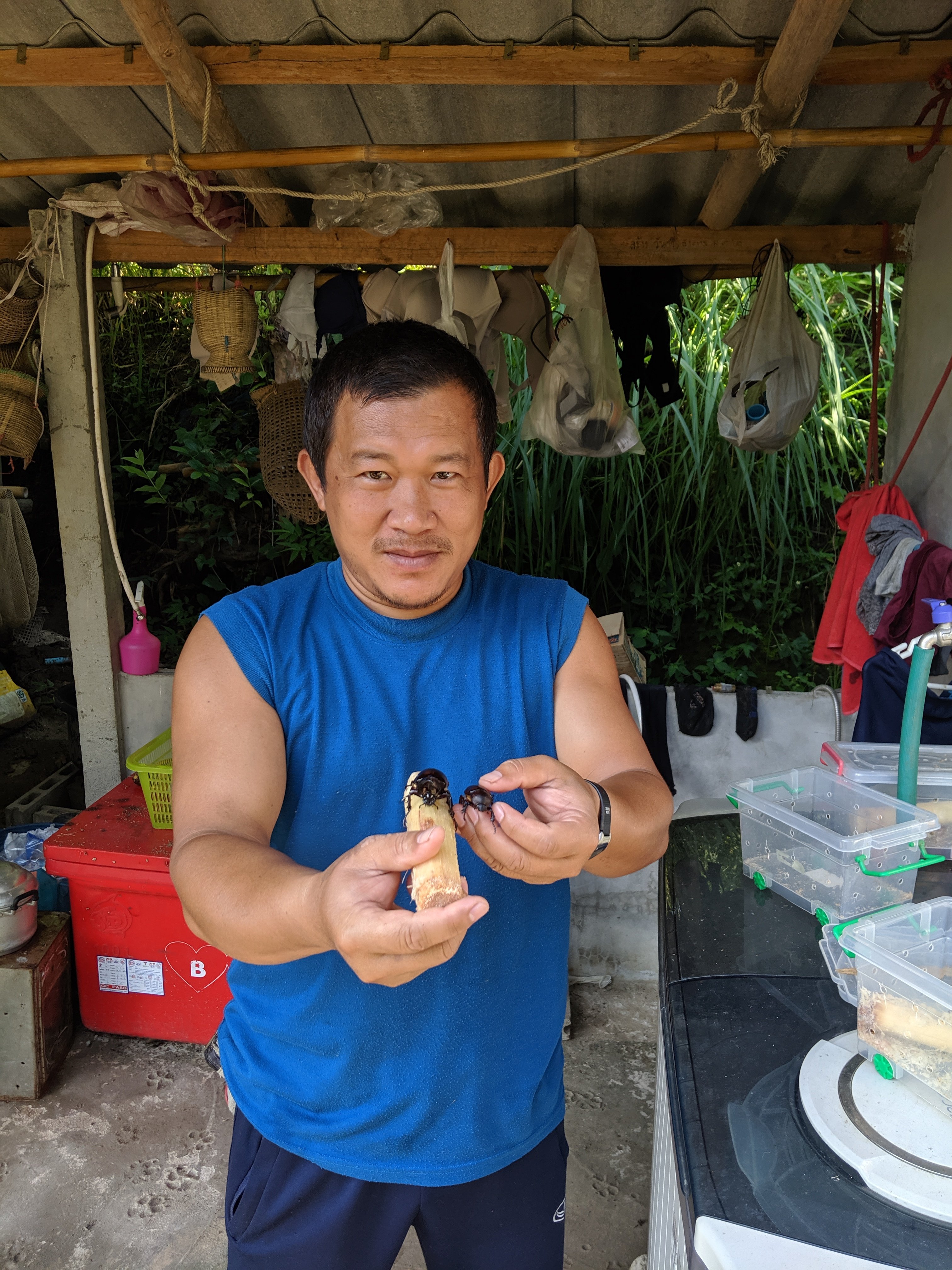
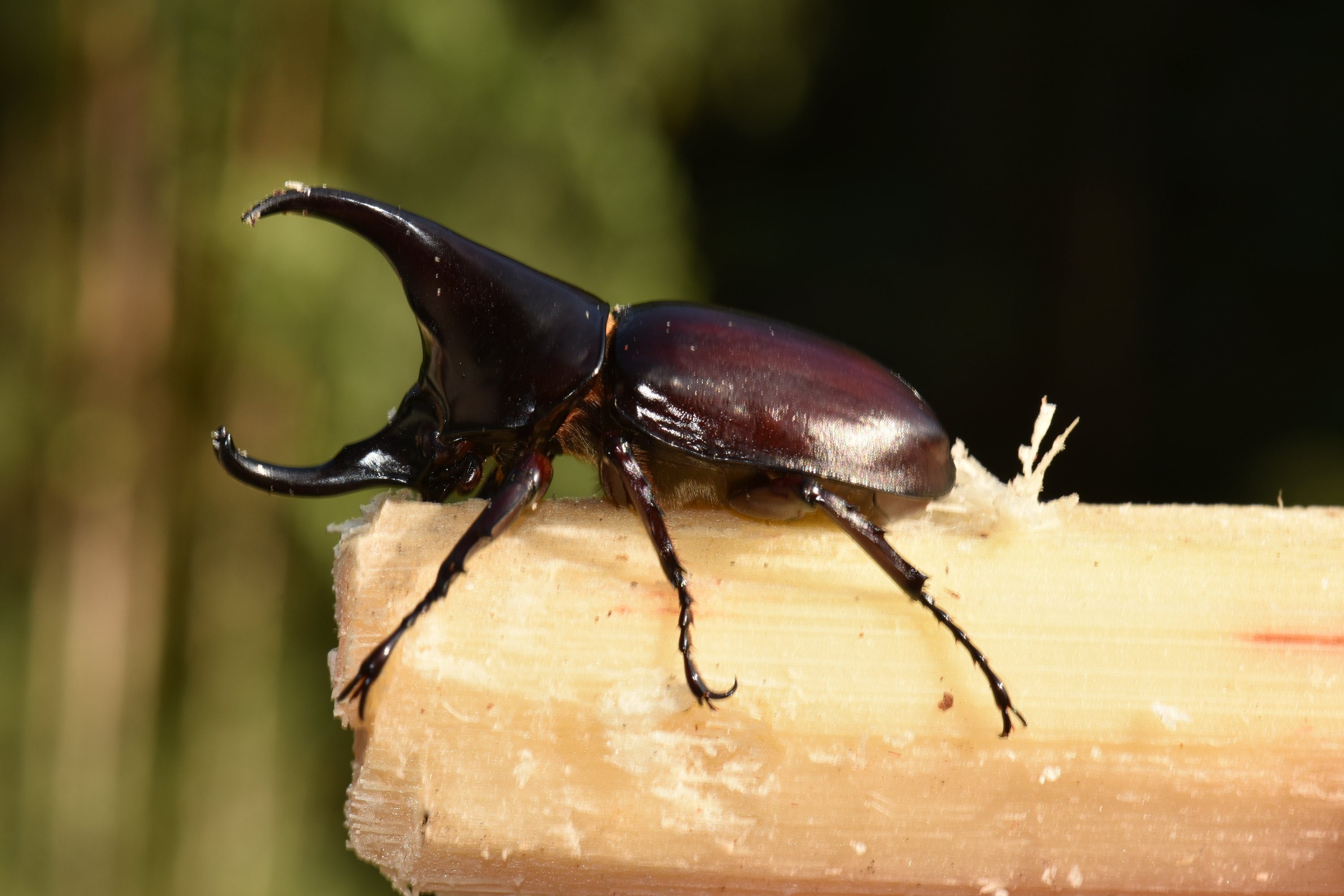
The next hour proceed to be one of the coolest experiences of the trip. Tan and Em demonstrated a beetle fighting tournament. Tan uses a large piece of bamboo specifically carved for beetle fighting. In the middle, there is an enclosure for a female beetle to sit. There is a small window on the outside of the bamboo where the males can detect her. Each ‘fighter’ palaces their beetle on the bamboo, and the fight is initiated. Each fighter has a small wooden cycliinder they use to rub along the bamboo and along the beetles to stimulate them to ‘fight.’ The beetles then attempt to throw each other off of the bamboo to try and ‘win’ rights to the female beetle. No beetles are really injured in these fights, as their strong exoskeletons protect them as they fall off the log. As the night progressed, local boys showed up to come watch.
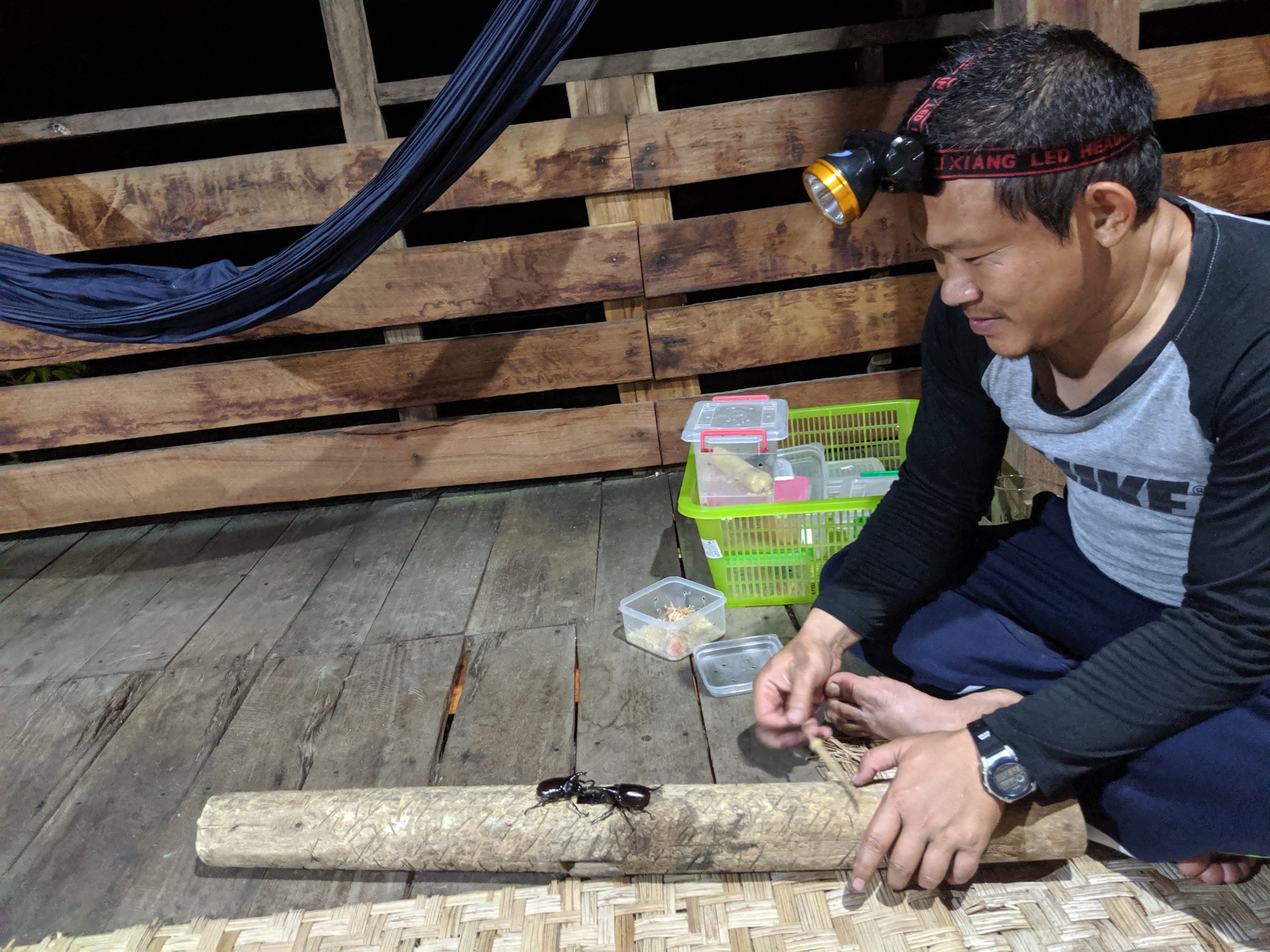
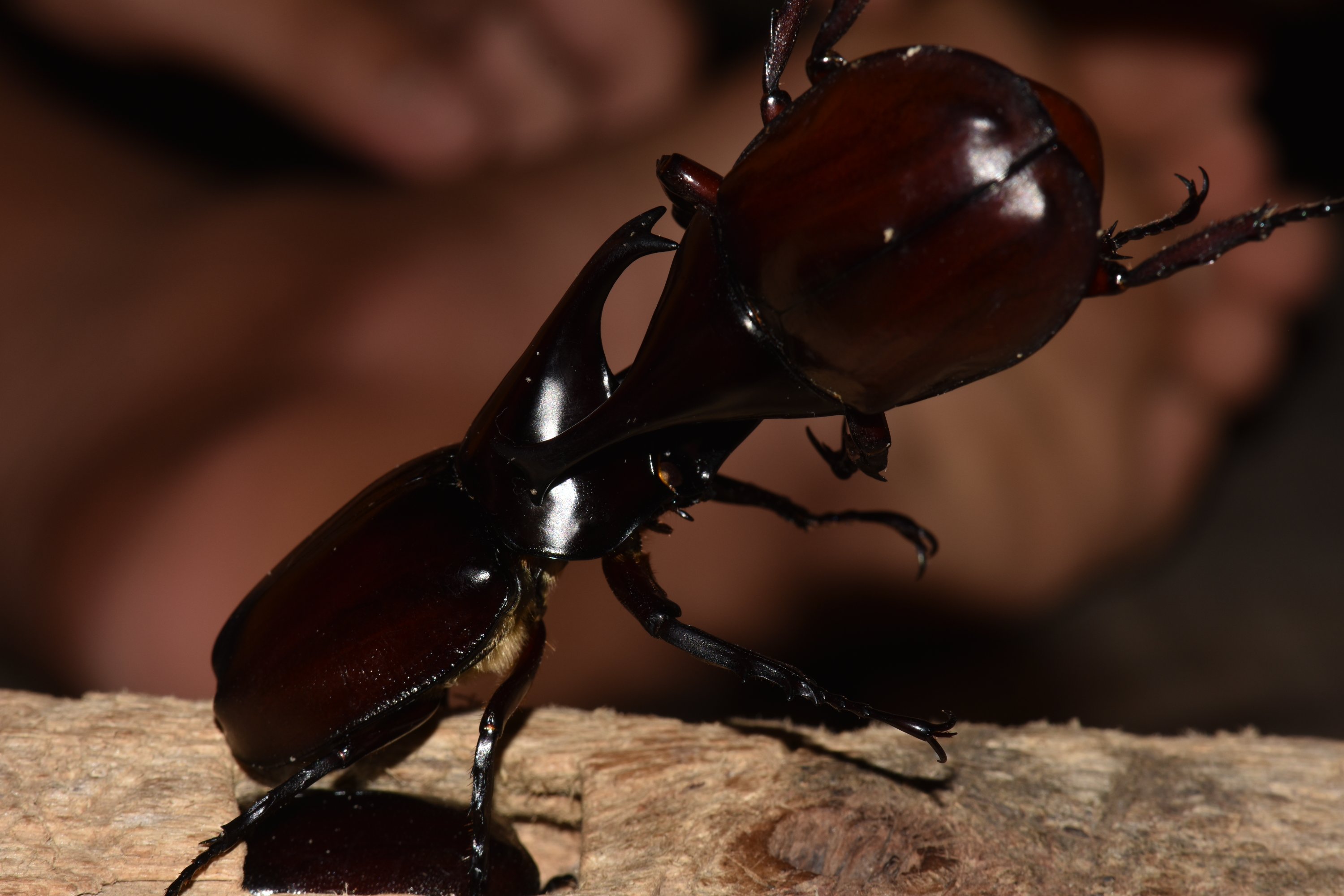
After the beetle excitement, Kylie returned to our sleeping quarters while Matt scoured the grounds for some night collecting of bugs. He was called over by Got, who asked if he wanted to try something special… Thai whiskey! Aka not whiskey at all, but moonshine! Got invited Matt to Tan’s property, where he sat down with Tan’s wife and Got to participate in what can only be described as a Thai drinking challenge. After a couple of drinks, Tan appeared with another special treat for Matt – it was a wasps nest he had harvested earlier that day and had smoked for Matt to eat. (Matt here) – I immediately thought that Kylie would be upset if she missed this opportunity to drink Thai whiskey and eat wasp larvae under the stars, so I ran and got her out of bed to come and join us. As we peeled away the wasp nest to get at the larvae, our eyes widened and we were SO surprised at the delicious, savoury hickey flavour that filled our mouths upon consuming the larvae. SO GOOD, like actually incredibly tasty.
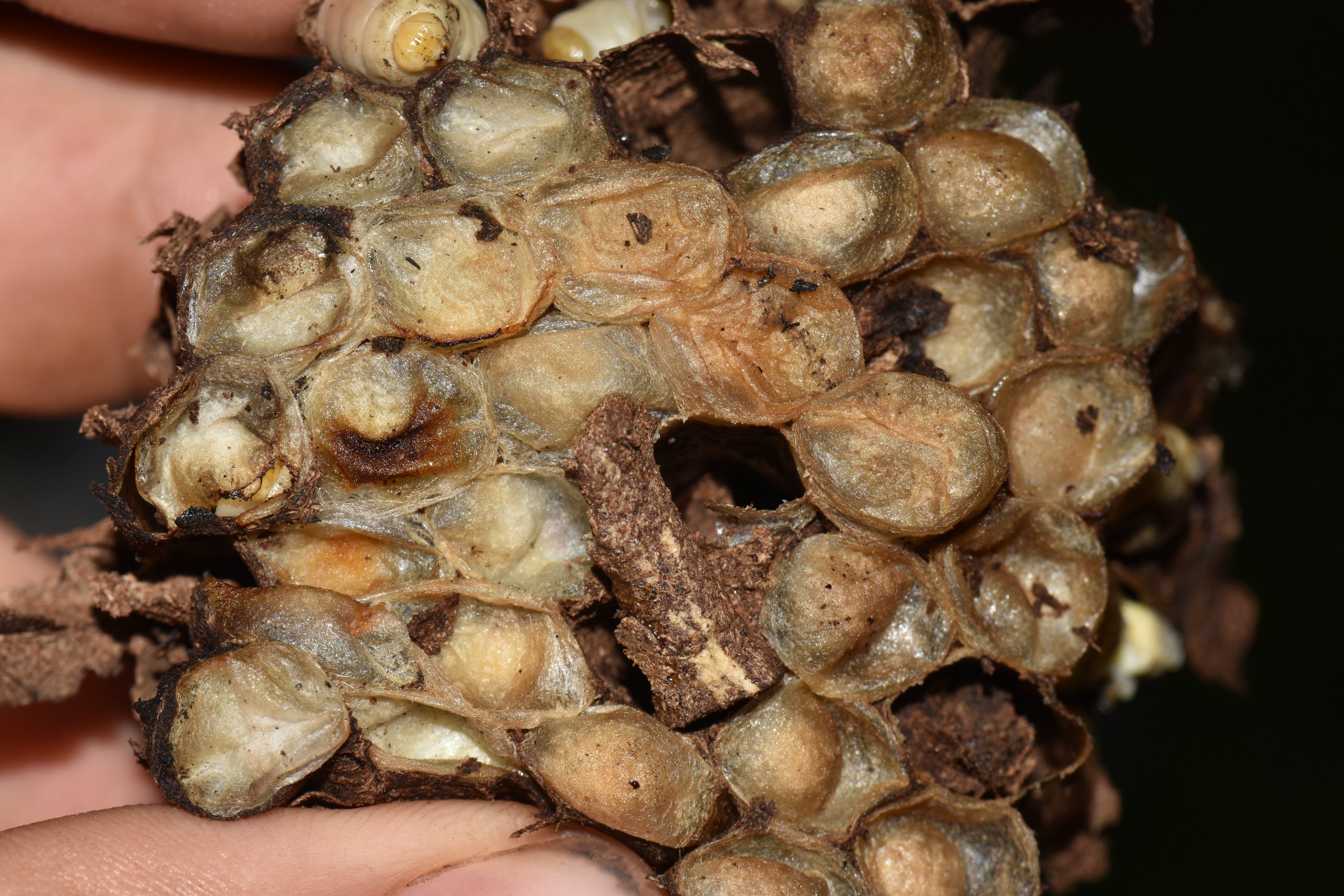
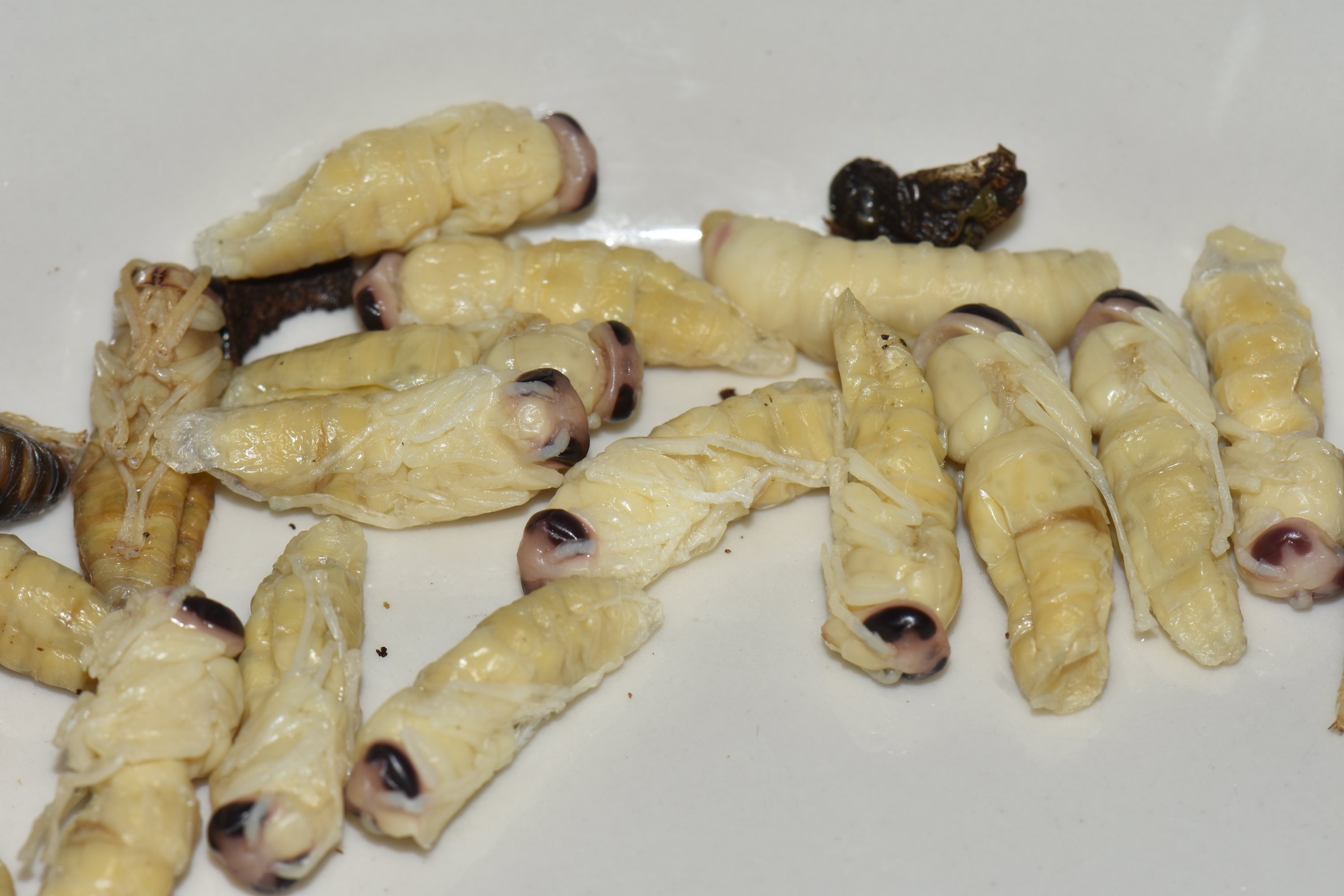
The more we drank and ate, the more we got to know Got and Tan’s wife (whose name eludes us). Even though she could not speak English, we were all able to communicate (especially with some translating from Got), and it felt like we were able to really get to know Got and a friendship was actuallly developed. By the end of the night, Kylie had been offered handfuls of fresh garlic after the moonshine was finished and Tan’s wife noticed her garlic tattoo. We then stumbled off to bed.
LAST DAY AT BEES
Feeling a little bit hungover, we woke up early to watch the elephant training done by Chrissy and Emily. Chrissy runs a non-profit organization to provide positive reinforcement training for captive and retired elephants in an attempt to move away from the traditional abusive methods of training. Chrissy was currently working on having the elephant ladies lift their front foot up one at a time to prop onto the bars of their paddock, exposing the entire bottom of their foot. This is a very important behaviour for elephants to learn because it allows veterinarians access to their feet in a relatively stress-free manner. Foot infection and disease is a leading cause of death for captive elephants. Infections can quickly spread up the leg and reduce mobility, and if elephants can not graze, they will likely die. Elephants require 300 – 400 pounds of food a day, so an injured foot is literally life or death for an elephant.
After training, we packed up our gear, said our goodbyes (Kylie cried), and Burm and Emily drove us to the bus station in China Mai. We were JUST on time to catch the next bus to Chiang Rai.
It is hard to put into words how much of an impact our time at BEES had on us! It not only taught us so much about elephants, but it taught us a lot about the way of life for a small village in Thailand. We were very fortunate to have such accommodating hosts, and were extremely lucky that we were the only tourists there for this week, which definitely personalized our experience a bit. We hope to return here one day, and would strongly recommend anyone travelling through Chiang Mai to spend a few days at BEES. This may have been the most genuine and enriching experience we’ll get on this trip. The money we paid ($300 each) went directly towards paying the staff who are responsible for us and the elephants. It felt like a home away from home, and we wish BEES luck in the future.
-M+K

 Matt and Ky Travel Thai (+)